Editor's Pick

FedEx and Dun & Bradstreet Launch Retail Momentum Index for Supply Chain Visibility

FedEx and Dun & Bradstreet have launched a monthly U.S. retail barometer that draws on near-real-time logistics signals, giving buyers and lenders an earlier read on spending trends than standard government reports. FedEx-D&B Retail Momentum Index Debuts The Retail Momentum Index blends Memphis-based FedEx Dataworks’ domestic parcel flows with Jacksonville-based Dun & Bradstreet’s ocean-container bookings, customs-delay logs, and firmographic file covering 400 million companies. Engineers merged the two data sets in December 2025 and published the first public table on 3 February, a timetable executives describe as unusually quick for an enterprise-grade indicator. The index is calibrated against the Census Bureau’s Advance Monthly Retail Trade Survey yet is designed to flag turning points two to six weeks sooner. Q4 2025 Data Signal Slower Retail Slide Opening numbers show year-over-year retail momentum down 10.3 % in the fourth quarter, roughly half the 21 % drop seen a year earlier. Return-shipment volumes—a proxy for order-error rates and buyer remorse—fell 54.5 % between 2024 and 2025, suggesting steadier consumer confidence and leaner inventory planning. Policy turbulence shaped the arc: momentum dipped after April tariff hikes, rebounded when levies eased in late summer, then cooled again in December once holiday lift faded. Analysts read the pattern as proof that trade rules, not standard demand cycles, now drive the biggest swings. 2025 Shutdown Accelerated Partnership Executives trace the collaboration to the 43-day federal funding gap last spring that delayed Census, BEA, and CFPB releases. “Customers suddenly had a six-week blind spot,” said Tony Kreager, FedEx Dataworks chief commercial officer. Dun & Bradstreet risk GM Alex Zuck noted that lenders began asking for alternative signals to price credit lines and inventory loans. Cross-correlation tests run during the shutdown showed FedEx ground and air volumes explained 78 % of the eventual variance in the Census retail series, convincing both boards to turn the feed into a product. Index Updates Every 72 Hours Standard monthly retail sales arrive 30-45 days after month-end; the new index refreshes every 72 hours as fresh shipping manifests and container bookings are parsed. A machine-learning layer strips out seasonality, weather, and holiday noise, then scores momentum on a 0-200 scale where 100 equals flat activity. Early adopters—mostly consumer-goods manufacturers and regional banks—receive csv files and Power BI templates that map strengths by four-digit NAICS code and by state. Public Releases to Run Through Spring 2026 Kreager and Zuck say the April edition will add sector-level sub-indices for electronics, apparel, and groceries. A companion API feeding directly into enterprise-resource-planning systems is slated for beta this summer, priced per call. Longer term, the pair is exploring similar dashboards for European and intra-Asia trade lanes, tapping FedEx’s TNT network and D&B’s newly acquired maritime-data unit. Useful Resources U.S. Census Bureau Advance Monthly Retail Trade Survey – benchmark dataset used to calibrate the new index FedEx Dataworks Developer Portal – documentation for upcoming logistics-data APIs Dun & Bradstreet Global Trade Insights – container-level delay and booking analytics underpinning the maritime slice of the index

Emily Johnson · Logistics Technology 2026-03-12 18:12
Featured

Fabletics RFID Inventory System Boosts Store Accuracy and Sales

Fabletics stitches RFID tag into every sports bra and legging, pushing inventory accuracy to 99% and cutting store labor hours across 114 U.S. locations, executives said two days before the brand receives the inaugural Masters of Innovation Award at Manifest 2026.RFID Fleet-Wide in Six MonthsKatherine Dela Cruz, vice-president of retail operations and training, told SupplyChainBrain that once tag standards were locked, the chain-wide install took “roughly half a year,” a pace she credits to early buy-in from both the C-suite and Asian factory partners. Each garment now carries a serialized license-plate ID—style, color, size, plus a unique number—feeding warehouses, e-commerce, and stores without relabeling. Twenty outlets slated to open in 2026 will launch RFID-ready.2018 Pitch Becomes Factory-Floor RealityTalks began in 2018 when Dela Cruz’s team translated shrink reduction and floor efficiency into ROI terms for executives who already treat Fabletics as “a tech firm that happens to sell leggings.” The harder part, she said, was deciding which data fields to encode so tags stayed useful through distribution, replenishment, and returns. Final specs require vendors to embed tags at manufacture, erasing downstream rework and ensuring 100-percent source tagging before cartons sail.Smart Mirrors Track Conversion, No Hand Scans NeededOverhead readers and fitting-room sensors grab the tag’s EPC number the moment a shopper enters with an armful. The mirror auto-pulls alternate sizes, killing barcode scans and logging which pieces convert. Dela Cruz credits the fitting-room data with “single-digit-percent lifts” in units per transaction; stylists now get real-time nudges to show matching accessories already on the floor.Morning Cycle Count Drops From 2 Hours to 20 MinutesInventory counts that once tied up two employee hours per store now finish in 20 minutes via a handheld sled that reads thousands of tags a minute. The freed time flips to “customer storytelling,” Dela Cruz said—explaining recycled fabrics or pitching the Fabletics VIP subscription. District managers report hourly payroll down 6–8 percent while net promoter scores climb, an outcome the company labels direct payback on its seven-figure RFID spend.Award Caps Three-Year SprintThe Masters of Innovation honor, presented jointly by SupplyChainBrain and Let’s Talk Supply Chain at Manifest 2026, singled out Fabletics for “scaling item-level RFID across a vertically integrated fashion brand without disrupting seasonal drop cadence.” Judges cited hard ROI—shrink below 1 percent for the first time—and softer gains in experiential retail, a balance many apparel chains still chase.Action Steps for RetailersAudit current inventory accuracy; if cycle-to-book variance tops 3 percent, pilot RFID on one high-velocity category.  Negotiate source-tagging contracts with top three suppliers to avoid relabeling costs.  Map in-store chokepoints—fitting rooms, back-of-house replenishment—where automatic reads can free labor for client-facing tasks.  Layer sensor data onto POS reports to quantify conversion lift before scaling fleet-wide.Sources: SupplyChainBrain, Let’s Talk Supply Chain

Robert Smith · Supply Chain 2026-03-12 18:04
Featured

Global Freight Audit Models Shift to Distributed Architecture for Resilience

Global shippers are quietly rewriting vendor scorecards, ranking “operational architecture” above automation speed when they vet freight-audit partners.A single regional outage can stall 40–60 % of exception resolution if invoices still route through one hub, the 2026 Global Logistics Finance Benchmark warns. Centralized Hubs Struggle With Multi-Jurisdiction Loads Legacy centres built for single-country traffic now juggle documents crossing 40-plus regulatory regimes.Invoice formats, accessorial rules and carbon-adjustment tables change at every border, tripling complexity versus domestic-only work.Follow-the-sun surges—common when China-Europe sailings hit Rotterdam during U.S. east-coast office hours—leave monolithic teams either overstaffed at midnight or blind at dawn.CFOs respond by booking accrual provisions 8–12 % higher, lifting working-capital buffers to cover the uncertainty. Regional Nodes Prove Faster During Disruptions Providers that mirror trade flows—Europe hub in Prague, Asia-Pac in Singapore, Americas in Mexico City—cleared exceptions in 14 hours on average during the Red Sea rerouting spike, versus 36 hours for single-site rivals.Built-in redundancy lets one node shoulder another’s invoice queue when local staff are locked out by weather, cyber events or sudden rule changes.Enterprise shippers on this model tell KPMG their confidence in quarterly cash-flow forecasts is 28 % stronger. EUDR and CBAM Rules Swell Invoice Lines The EU Deforestation Regulation and carbon border adjustment (CBAM) pushed invoice line items up 35 % this year.Proof-of-origin geolocation, carbon-content add-ons and recyclable-pallet declarations must be validated before payment; a Shanghai processor unfamiliar with Hamburg wood-packaging codes simply dumps the bill into manual queues.Distributed teams that embed compliance analysts inside each regulatory perimeter cut first-pass rejection rates to 4 %, Treasury Intelligence Solutions data show, against 18 % for centralized peers. Freight Audit Turns Into Balance-Sheet Lever Treasurers no longer treat freight payment as a back-office chore; accrued freight is often the largest open item on quarterly balance sheets.Clean, continuous data feeds feed directly into cash-discount programmes and supply-chain finance eligibility.One U.S. retailer that shifted to a three-hub audit network last year unlocked $42 million in disputed duty payments frozen in customs suspense accounts, adding 30 basis points to its liquidity ratio. Scorecards Now Reward Geography Over Gimmicks CFOs want node-level service-level agreements tied to specific trade lanes, not generic uptime.Supply-chain directors demand native-language auditors credentialed in local tax law.Procurement teams weight “exception-resolution velocity during past force-majeure events” equal to price.Tech managers test whether machine-learning models ingest multi-lingual invoices; rules-based bots trained only on U.S. data mis-code EUDR lines 22 % of the time, internal tests show. Action Steps Map your top 80 % of freight spend by origin-destination pair; require auditors to show physical processing capacity in each quadrant. Insert a business-continuity clause demanding 24-hour failover to an alternate node with documented regulatory expertise for every primary lane. Shift RFP scoring so operational redundancy, regional compliance staffing and exception-resolution history together account for at least 50 % of total weighting. Run a three-month parallel pilot: send duplicate invoice feeds to incumbent and distributed challengers; compare accrual variance, late-payment penalties and audit-findings exposure. Negotiate gain-share language that splits any working-capital savings generated by faster, more accurate audit data to speed payback on switching costs. Source: 2026 Global Logistics Finance Benchmark

Maya Reed · Shipping & Freight Forwarding 2026-03-11 11:37
Featured

Order Picking Labor Shortage: Warehouse Ergonomics & Automation Solutions

Order picking has become the toughest role to staff in U.S. distribution centers, with 20% of warehouse operators telling industry surveyors they cannot keep the positions filled and annual turnover topping 25%. Order picking now drives 55% of warehouse budgets Pick-and-pack labor swallows more than half of a typical facility’s operating budget, a share that keeps rising as same-day shipping windows shrink. A single picker can walk 8-12 miles per shift, lifting cases in zones that swing from 35 °F freezer aisles to 90 °F upper racks. The physical toll, zero-tolerance accuracy standards, and six-week training curve spin a revolving door that erodes service levels and inflates overtime budgets. ABC slotting and taller racks cut travel time Travel distance is the easiest cost to attack. Slotting the 20% of SKUs that generate 80% of picks within 75 ft of the pack bench trims foot traffic 18-22%. Going vertical helps too: 24-ft narrow-aisle racks double pick faces, and gravity-fed carton flow lanes keep fast movers at waist height. Facilities that map these changes before buying automation often recover 7-10% in daily throughput without adding staff. Voice and robots lift productivity 30% Hands-free, eyes-up voice systems have become the gateway tech: pickers wearing headsets confirm locations aloud, driving mis-picks below 0.2%. Collaborative robots take the next step, bringing shelves to stationary workers and eliminating half of all walk time. A modular automated storage and retrieval (AS/RS) mini-load can quadruple picks per labor hour in the footprint of four manual aisles, letting firms phase in capital spend as SKU counts grow. Automation curbs turnover and boosts pay A Material Handling Institute poll finds 98% of workers on assisted lines report higher productivity, and 60% feel less physical strain. Those numbers translate to tenure: tech-assisted operators stay three times longer than purely manual crews. Nearly half also earn premiums for running the equipment—an automatic raise that still costs less than endless recruiting. Career maps keep pickers promoted Clear advancement ladders beat blanket wage hikes when margins are thin. A typical path—picker → voice trainer → team lead → shift supervisor—can be finished in 24 months if each rung demands documented modules on WMS proficiency, lift certification, and Lean basics. Posting internal openings first and funding one outside course per year costs under $600 per employee yet halves first-year attrition. Action steps for warehouse executives Time 100 random picks next week; multiply travel minutes by fully loaded labor cost to build an ROI case for slotting changes. Pilot voice picking on the highest-volume SKU cluster—hardware leases start below $800 per headset. Add “automation mentor” to at least one hourly job description; promote from within once throughput rises 20%. Track accuracy, overtime, and voluntary turnover in the same dashboard; share monthly so labor and ops managers own one integrated metric. Useful resources WERC DC Measures Study – Annual benchmarking report on pick accuracy, cost per line, and turnover benchmarks. MHI Automation Roadmap – Free PDF outlining modular steps from voice to full AS/RS. OSHA Warehouse Ergonomics eTool – Checklists for slotting heights, lift limits, and anti-fatigue mats.

Joseph Osborne · Warehousing & Distribution 2026-03-11 18:32
Featured

Air Cargo Spot Rates Fall 3% for Sixth Straight Month, Xeneta Data Shows

Global air-cargo spot rates have now fallen for six straight months, hit by swelling belly capacity and stalling merchandise trade, Xeneta’s latest market round-up shows. Spot Rates Drop 3% to $2.58/kg in October The average worldwide spot price slipped to $2.58 per kilogram in October, 3% below the same week last year, while longer-term contract prices slid 8% to $2.31/kg. Although tonnage moved rose 4% year-on-year, available cargo space widened even faster, climbing 5% as passenger airlines restored wide-body schedules across the Pacific and Atlantic. The imbalance left load factors flat and kept pricing power firmly in shippers’ hands. Southeast Asia-US Rates Fall 21% to $4.84/kg Trade-lane snapshots reveal the steepest discounts on the Southeast Asia–North America corridor, where October spot levels averaged $4.84/kg—down 21% from 2023. Northeast Asia–North America eased 10% to $4.37/kg, and Europe–North America added 4% to $2.09/kg, a marked slowdown from the 23% surge recorded in the first quarter. Freight forwarders say carriers are reopening allocations that had been rolled over during the summer, forcing last-minute rate cuts to fill decks. E-Commerce Decline Follows US De Minimis Rule Shift Cargo volumes exceeded Xeneta’s September forecast, but the composition of demand has shifted. After Washington closed the $800 duty-free de minimis threshold for Chinese packages on 29 August, China-US e-commerce traffic shrank 34% year-on-year in September—its fifth consecutive monthly contraction. The Europe-North America lane lost 6% of its tonnage in October, reinforcing worries that parcel traffic is migrating to all-cargo ships or regional fulfillment centers to avoid new tariffs. Forwarders Brace for Margin Pressure in 2025 With overall growth expected to stay below 3% next year, intermediaries are preparing for a second wave of compression. “Everyone is chasing the same loads,” one Hong Kong-based general-sales agent noted, adding that some carriers have already offered fourth-quarter block-space agreements priced below summer levels. Logistics executives told Xeneta they plan to renegotiate handling contracts and park leased freighters to keep unit costs aligned with softer yields. Shippers Gain Leverage on Annual Contracts The prolonged dip gives importers unusual leverage in 2025 tenders. Benchmark data shows that spot and contract prices have converged within 10¢ on several lanes, allowing shippers to lock in two-year deals without the traditional premium. Still, analysts warn that aggressive cost cuts could backfire if consumer demand revives ahead of the Lunar New Year. Carriers retain the option to idle capacity quickly—three 777 freighters were grounded last month—so sharply lower rates may prove temporary if Asian factories accelerate output. Useful Resources Xeneta Air Freight Analytics – on-demand rate and capacity indices updated weekly IATA Air Cargo Market Analysis – monthly traffic growth by region with load-factor tables Baltic Exchange Air Freight Indices – benchmark spot prices for major corridors US International Trade Commission – de minimis rule changes and duty calculators Seabury Cargo database – granular origin-destination flow forecasts by commodity

Juniper Snow · Shipping & Freight Forwarding 2026-03-10 18:06
MODEX 2026 Atlanta Preview: 1,000 Exhibitors, 15,000 Visitors, Full-Automation Demos

MODEX 2026 Atlanta Preview: 1,000 Exhibitors, 15,000 Visitors, Full-Automation Demos

MODEX 2026, North America’s largest manufacturing and supply-chain trade show, will occupy Atlanta’s Georgia World Congress Center from 13–16 April. More than 1,000 suppliers and an expected 15,000 buyers will test robotics, freight tech, and digital logistics platforms across 500,000 square feet of exhibit space. Show Floor Expands to 500,000 Square Feet Exhibitors booked the entire B and C halls, pushing organizers to lay temporary decking in the loading yard. The layout equals nine U.S. football fields and will hold gear ranging from hand-crank pallet jacks to 40-ft stacker cranes linked by 5G warehouse software. A fenced 0.8-mile outdoor loop lets cargo-bike start-ups race electric trikes against diesel vans while parcel-firm engineers log torque and battery drain. Demonstrations restart every hour so operations managers can line up competing systems without calendar gaps. Daily Keynotes Focus on Digitization ROI Finance leaders from Levi’s, Nestlé USA, and Norfolk Southern open the main stage at 08:30 Monday, explaining how cloud control towers trimmed eight-figure carrying costs. Tuesday shifts to tech, with Georgia Tech researchers presenting an 800,000-SKU simulation that shows AI vision can cut cycle-count labor 34 %. Wednesday spotlights MHI’s Annual Industry Report, drawn from 2,400 global respondents who graded their readiness for port strikes, chip shortages, and cyber attacks. Overflow screens simulcast each session; attendees keep 90-day on-demand access. Micro-Theaters Offer 180 Tactical Briefings Thirteen pocket theaters, each seating 80, run hourly blocks on niche issues: robotic depalletizing, cold-chain pouch sorting, Scope-3 carbon tallies, and a new Supply Chain Resiliency playbook track. Robotics and sustainability sessions usually fill 10 minutes before start time; veterans advise using the MODEX app to reserve a seat during the 48-hour pre-show window. Startup Pavilion Awards 200-Square-Foot Pods Hall C’s glass-walled zone gives 14 young companies a three-minute pitch slot judged on scalability, energy draw, and plug-and-play ease. Last year’s winner—a drone that photographs and grades pallet damage—closed a $9 million Series A within 60 days, raising the bar so high that 2026 applicants are pitching louder and earlier. Expect standing-room-only for the Tuesday finale. Workforce Forums Address Gender Gap and Talent Pipeline Women occupy only 27 % of senior supply-chain roles, per Gartner’s 2025 census. MODEX counters with a Monday 16:00 forum offering mentorship match-ups and C-suite office hours. Student Day buses 400 undergrads from 12 Southeast engineering schools through guided tours, while recruiters from DHL, FedEx, and Toyota run pop-up interviews on the concourse. A Young Professionals mixer at the nearby College Football Hall of Fame ends Monday, handing first-time attendees a contact list before the floor reopens Tuesday. Pre-Show Planning Tips Downtown hotel blocks sell out by January; book early or consider MARTA-rail stops outside the perimeter for lower rates. Download the official app after 1 February to tag must-see booths and build an hour-by-hour map—cell reception drops once 15,000 badges tap in. Cushioned footwear is mandatory; a full-aisle lap tops six miles of concrete. Request exhibitors’ content keys on the spot; the 90-day on-demand library vanishes after three months, erasing 1,000 clips you vowed to watch later. Source: MHI

Amelia Rhodes · MODEX2026 2026-02-28 18:40
MODEX 2026 Atlanta: Dates, Hours, Exhibitors and Automation Highlights

MODEX 2026 Atlanta: Dates, Hours, Exhibitors and Automation Highlights

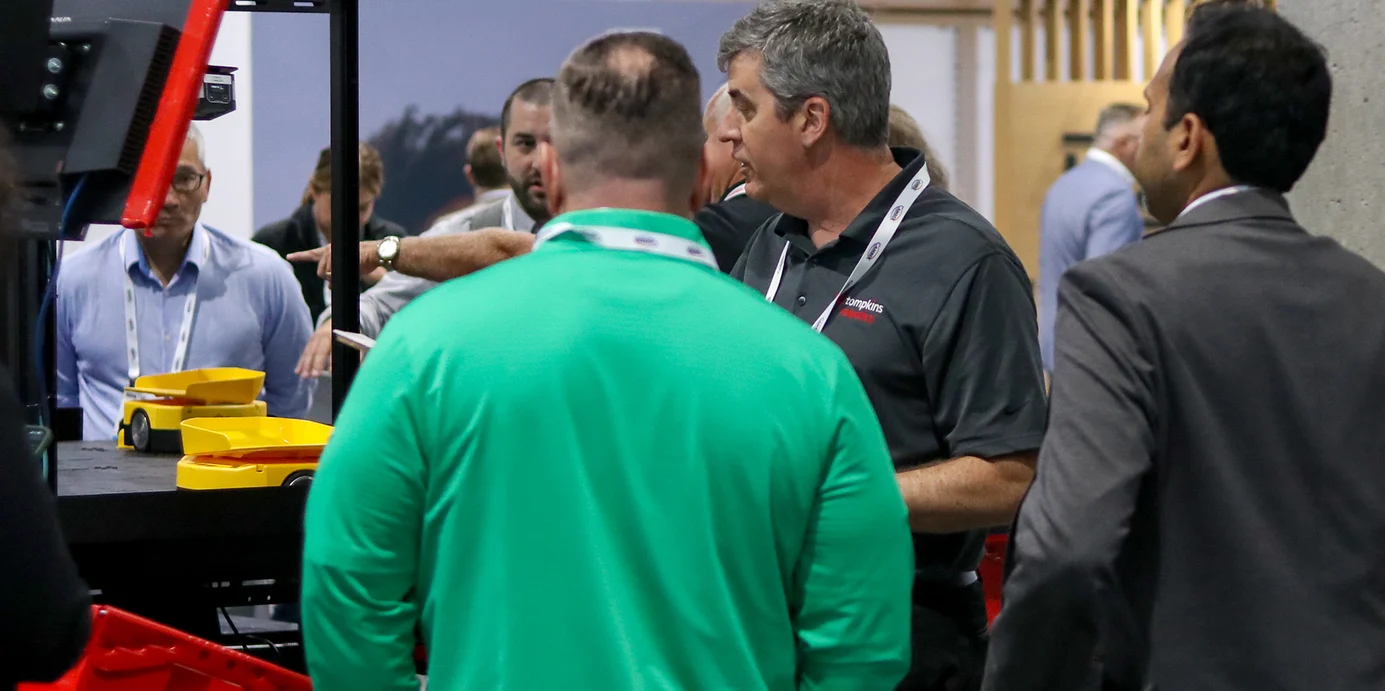
MODEX 2026 opens 13 April at Atlanta’s Georgia World Congress Center for a four-day showcase of warehouse automation, AI inventory tools, and zero-cobalt robots. More than 1,100 suppliers and roughly 40,000 logistics executives, engineers, and investors are expected.Show Hours, Floor Plan, and New-Visitor TipsThe expo fills three connected halls: Hall A for WMS/TMS and analytics, Hall B for conveyors, AMRs, and robot arms, Hall C for storage and ergonomic gear. Badges are ready at 08:00 inside GWCC Building B lobby; security and the walk to the last aisle take about 20 minutes total. Exhibit hours run until 17:00 Monday-Wednesday and 13:00 Thursday so vendors can power down cells before the drayage cutoff.Tompkins Robotics Booth B16127: 40,000 Items, No Fixed ConveyorA 90-by-90-foot island will run two linked tSort fleets—one routing poly-bags, the other shoe boxes—feeding 6,048 chutes. The cube-based layout lets workers re-slot a zone overnight without cutting steel; a Phoenix fashion site recently logged 38,700 sorts per hour at 99.6 % accuracy. Attendees can tap an induction tablet to watch AI wave-balancing keep chutes clear during returns spikes.AI ROI Sessions and Labor Modeling TracksMonday’s 09:15 keynote in the Thomas Murphy Ballroom pairs Home Depot’s CFO with MIT’s Dr. Maria Alvarado to release data showing predictive slotting trims overtime 11 % in one quarter. Tuesday’s slate spotlights “software-defined automation,” including BlueYonder plug-in simulators that stress-test robot counts against peak-week order curves. Wednesday closes with investors explaining why venture checks are shifting from fixed steel to flexible, lease-based fleets.Sector-Specific Visitor PlaybookC-suite guests should book the 90-minute “Capital Approval Toolkit” (Tuesday, 11:00) where MHI economists fold energy inflation and carbon-tax credits into payback math. Plant engineers can size up KUKA’s LBR iisy cobot, OMRON’s HD-1500, and three rival HMI stacks within a 400-foot radius in Hall B—bring a USB-C drive; most booths hand over native CAD files. Deal scouts can circle the southeast corner of Hall C: twelve Series-A firms displayed there last year, and three were acquired within nine months.Free Badge Perks and Evening EventsExhibitor-search Wi-Fi, shuttles from the Omni and Hilton, and the 15 April “Industry Night” reception at the College Football Hall of Fame (18:30-21:00) are bundled with the no-cost expo pass. Register online before 31 March to avoid the $50 on-site fee; mobile QR codes speed turnstile entry.Pre-Show ChecklistReserve a GWCC-footprint hotel—block rates end 1 March.  Lock in booth meetings through the MODEX Connect app; calendars fill two weeks out.  Download the MHI Economic Report (free after registration) to prep for ROI talks.  Pack a 32 GB flash drive—hall Wi-Fi saturates fast when CAD files and white papers drop.Source: MODEX 2026 press kit

Layla Delgado · MODEX2026 2026-02-28 11:27
MODEX 2026 Supply Chain Technology Preview: 8 Key Exhibits

MODEX 2026 Supply Chain Technology Preview: 8 Key Exhibits

Global supply chain managers start 2026 juggling three non-negotiables: cut operating cost, hit sustainability deadlines, and wire every new asset for AI. The squeeze has shrunk procurement cycles from two years to as little as six months, turning equipment buys into high-speed chess. Supply Chain Tech Pressures Collide in 2026 Operational teams no longer stage roll-outs in tidy phases. Efficiency mandates, carbon-disclosure rules, and AI-readiness checks land on the same quarterly ledger, forcing buyers to compress deployment windows from 18-24 months down to 6-12. Capital budgets are being rewritten: automation that once fought for funds must now arrive pre-connected to emissions sensors and cloud analytics before the purchase order is inked. In Atlanta, March 4-7, MODEX 2026 positions itself as the one hall where hardware vendors, integrators, and compliance experts share floor space—and shoulder shared risk. Eight Technology Zones Frame MODEX 2026 Floor Organizers have split the Georgia World Congress Center into eight parallel districts, each pegged to a 2026 pain point: Packaging, Containers & Shipping Equipment – live lines erecting right-sized cartons, dunnage-on-demand systems, in-line weight/vision gates Dock & Warehouse Infrastructure – next-gen dock seals, vertical lift modules, lithium forklifts with quick-swap battery cassettes RFID & Auto-ID Systems – UHF sensor tunnels, vision barcode guns, voice-pick headsets feeding cloud WMS Material Handling & Logistics – mini-load AS/RS, AMR swarms, micro-fulfillment software Supply Chain Management & Sustainability – renewable natural-gas reefers, reusable tote pools, Scope 3 carbon dashboards Inventory Management & IT – edge controllers, MQTT brokers, 5G hand-offs for cycle-count drones Transportation, Last Mile & Logistics – electric box-truck chassis, sidewalk bots, parcel-locker grids with heat-map analytics AI & Emerging Tech – digital-twin sandboxes, AR pick lenses, generative-AI maintenance copilots Cross-zone corridors feature integrator booths where hardware, middleware, and SaaS layers are pre-bundled, underscoring the industry’s shift from stand-alone devices to subscription ecosystems. Procurement Window Shrinks, Risk Appetite Follows Buyers arriving in March carry shorter capital-approval chains than in any prior cycle. A MODEX survey of 412 operations VPs shows 61% must now prove ROI inside 12 months to secure board sign-off, up from 34% in 2022. On-floor equipment trials have become de-facto due-diligence, replacing multi-site pilots slashed to save calendar time. Demonstration lanes double as living RFPs—forklift energy readouts, AMR pick logs, and RFID inventory reports are exported on the spot for finance teams running discounted-cash-flow models back home. Stakeholder Roles Redraw Around Compliance Clock Operations executives hunt automation that lifts throughput without adding headcount, yet must also satisfy ESG auditors. Technology integrators test API hand-offs between legacy WMS tiers and new carbon-accounting modules. Sustainability officers, once peripheral visitors, now book dedicated floor walks to capture equipment-level emissions data for 2027 SEC filings. Supply-chain strategists scan the transportation zone for urban-logistics partners able to trim final-mile CO₂ grams before peak-season surcharges bite. Labor Scarcity Spurs Collaborative, Not Replacement, Robotics MHI data puts 2026 unemployment in transportation and warehousing at 2.8%, intensifying hybrid automation strategies. Vendors respond with cobot pick-assist arms, exoskeleton wearables, and vision-guided pallet jacks that augment rather than displace workers—categories that claimed 11% of 2020 floor space now occupy 28% of MODEX booths. The shift lowers union resistance and shrinks training cycles, critical when deployment windows are measured in weeks, not quarters. Useful Resources MHI Industry Report: “Innovation in Supply Chain Automation 2026” – free PDF benchmarking 250 technology deployments Georgia Tech Supply Chain & Logistics Institute – open short courses on Scope 3 accounting for operations managers EPA SmartWay Program – carrier-ranking database to vet modal emissions before procurement ASCM SCOR-DS model – updated framework aligning sustainability KPIs with standard supply-chain metrics MODEX 2026 mobile app – real-time booth locator and demo scheduler to compress on-site research time Source: MODEX 2026 preview materials

Nova Quinn · MODEX2026 2026-02-26 11:55
MODEX 2026 Atlanta: 1,000+ Exhibitors, 50,000 Supply Chain Pros

MODEX 2026 Atlanta: 1,000+ Exhibitors, 50,000 Supply Chain Pros

MODEX 2026, North America’s largest supply-chain trade show, runs 23-26 March at Atlanta’s Georgia World Congress Center. The 600,000-square-foot expo will pack 1,050 exhibitors, 200 no-cost seminars, and an anticipated 50,000 buyers and engineers into four days. 600,000-Square-Foot Technology Showcase in Atlanta Building B has been re-striped into a working warehouse city. Aisles are wide enough for a forklift to travel the full hall without leaving carpet, letting visitors watch robotic palletizers, autonomous mobile robots, and 50-foot vertical lift modules run at full speed. Turnstile data from 2024 flagged congestion between 11:30 a.m. and 1:30 p.m.; organizers have added a second sky bridge and staggered demo slots for 2026. 200 Free Seminars Span AI to Yard Management Education director Mary Jane Huggins says the roster was built from 700 speaker submissions and favors live deployments over theory. Monday opens with “Cutting WMS Deployment Time by 40 %,” followed Tuesday by a block on generative-AI prompt libraries for slotting. Classrooms are wired for real-time data; dashboards can be downloaded on the spot. Overflow screens are being installed after 30 % of sessions hit fire-code capacity last year. 70 Product Categories Under One Roof Exhibitor tags released 15 May show 28 % robotics, 19 % warehouse software, and 12 % safety gear. A new micro-fulfillment zone lets grocery chains walk a 40-foot dark-store mockup and trigger shuttle systems by scanning SKU cards. A sustainability pavilion groups vendors of recycled totes, lithium-ion retrofits, and energy-recapture belts; each posts a QR-coded carbon sheet audited by a third party. Keynotes Target Margin Pressure and Disruption Target’s EVP of supply-chain automation, Gretchen McCoy, leads Tuesday’s opener, detailing how re-slotting 1.2 million SKUs saved 18 cents per e-commerce parcel. Wednesday brings Maersk’s ocean-network chief on Red Sea reroutes; Thursday pairs MIT’s Dr. Maria Álvarez with FedEx’s top data scientist to debate AI governance. Friday closes with three unicorn founders in a fireside chat moderated by Wall Street Journal reporter Paul Berger. Networking Events Built for Career Moves The Women in Supply Chain Forum, shifted to Monday after last year’s sell-out, adds a résumé clinic run by six executive recruiters. Young Professionals Reception caps attendance at 1,000 and uses color-coded lanyards to match engineers in the same software ecosystem. Industry Night shuts down Andrew Young International Boulevard for sidewalk beer gardens—vendors can pitch without booth noise limits. Useful ResourcesMODEX 2026 registration portal – free expo passGeorgia World Congress Center travel page – parking, EV charging, MARTAMHI Industry Report 2025 – automation adoption benchmarkAssociation for Supply Chain Management – CEU creditsWarehousing Education and Research Council – post-show white papers

Skylar Lawrence · MODEX2026 2026-02-23 11:53

Q4 Freight Planning: Black Friday Shipping Capacity & Carrier Contracts Checklist

Retail supply chains enter their make-or-break season the moment Labor Day ends. From that point, every extra transit day, every missed cutoff, and every stock-out chips away at both sales and customer loyalty. Analysts estimate that 40 percent of annual e-commerce margin is decided between Black Friday week and December 24, so the gap between a resilient network and an ad-hoc one shows up instantly in the profit column. Contract Lock-In Deadlines for Parcel, LTL, and FTL National carriers freeze most new service agreements after the second week of September. August rate cards already include peak surcharges—$0.35–$1.50 per residential package plus dimensional-weight penalties that can top $97 for oversized cartons—but the real choke point is volume allocation. UPS and FedEx together control roughly 78 percent of U.S. holiday parcel capacity; their combined network is projected to run 8–12 percent short of demand in 2026. Logistics teams that enter Q4 with only handshake “best-effort” space routinely see loads rolled or quoted at spot-market premiums 40 percent above contract levels. The fix is to hard-book at least 120 percent of forecast volume under primary contracts and layer in one regional carrier and one spot broker for each shipping lane before the September lock-in. Regional Carriers and Modal Shifts as Pressure Valves Regional parcel carriers—Ontrak, LaserShip/OnTrac, Pitt Ohio, and the eastern GLS unit—have narrowed service-gap metrics to within two percentage points of the duopoly while pricing 15–25 percent below national base rates. A mid-size retailer moving 20 percent of its short-haul volume to a regional network typically cuts one day off transit time and insulates itself against the worst capacity days (Cyber Monday and the second Monday of December). Modal shifts offer a second release valve: converting deferred parcel to LTL can unlock trailer space at $0.18 per pound versus $0.42 for ground parcel, provided order-consolidation software can batch at least 250 pounds to a single consignee. Last-Mile Promises That Survive the Crush Delivery-date promises displayed at checkout must be dynamically linked to carrier capacity feeds; static “arrives by” language is the single biggest source of post-purchase litigation and negative reviews once volumes spike. Amazon’s 2019 move to one-day Prime reset consumer expectations at a 1.7-day average acceptable wait; that figure has not rebounded even as networks strained. Retailers that audit cutoff logic daily—accounting for origin-zip congestion, residential surcharges, and weather—hold pre-peak chargeback rates below 0.6 percent, compared with 2.4 percent for merchants that publish fixed calendars. When capacity tightens, transparent messaging (“Choose free store pickup—ready today”) outperforms blind speed promises by 22 percent in conversion retention, according to Salesforce Shopping Index data. Reverse-Logistics Throughput Determines January Sell-Through Holiday returns start climbing December 26 and peak the first week of January; items that re-enter sellable inventory within 48 hours drive an average 18 percent additional full-price margin before post-holiday clearance begins. The constraint is labor: warehouse unemployment sits under 4 percent nationally, and ad-hoc staffing agencies are already placing sorters at $21–$24 an hour, up 6.2 percent year-over-year. Companies that pre-print return labels, presort by SKU at store level, and use third-party returns hubs clear goods to shelf 2.3 times faster than those that process in the same facility that handles outbound fulfillment. Third-party processors now charge $1.20–$1.45 per return unit—cheaper than the fully loaded $2.00 internal cost when overtime is factored in. Financial Buffers and Automation ROI for 2026 Planning CFOs are building peak surcharge reserves at 125 percent of 2025 actual spend to cover demand-based rate bands that escalate 15–25 percent once tendered volume exceeds contracted levels. Meanwhile, adoption of robotic storage and retrieval systems has jumped 34 percent among mid-market retailers as payback periods compress to 28 months under 6 percent annual wage inflation. The strategic takeaway: every automated tote retrieved without human touch saves roughly $2.30 in direct labor during peak, so a site handling 25,000 daily picks can self-finance a $5 million AS/RS module in two seasons if peak labor avoidance is included in the business case. Action Steps to Protect Holiday Revenue Reconcile carrier contracts by 10 September; secure 120 percent volume buffer and at least one regional back-up per lane. Load-test warehouse workflows at 150 percent of forecast; cross-train 30 percent of staff on pick, pack, and returns stations. Insert dynamic delivery-date logic in checkout; default to store pickup when promised arrival slips beyond three days. Contract a third-party returns processor for January; target 48-hour restock to capture late-season demand. Book surcharge accruals at 125 percent of prior-year spend and model returns cost at 8–12 percent of gross sales to avoid margin surprises. Useful Resources Parcel Shipping Index – Pitney Bowes annual report benchmarking carrier volume, revenue, and market share across 13 countries. CSCMP State of Logistics Report – Council of Supply Chain Management Professionals compendium of U.S. logistics costs, wage trends, and capacity metrics. Regional Carrier Capability Matrix – Interactive tool from Transportation Insight comparing transit maps, service guarantees, and surcharge tables for 30 non-national carriers. Salesforce Shopping Index – Quarterly dashboard correlating checkout delivery promise language with conversion and post-purchase satisfaction. Source attribution: original industry brief

Road Freight Market Growth 2024-2033: E-Commerce, Tech & Sustainability Trends

Global trucking and freight forwarding revenue is projected to swell by USD 1.87 trillion over the next nine years, lifting the sector from USD 3.22 trillion in 2024 to USD 5.09 trillion in 2033, a 5.1 % compound annual growth rate.E-Commerce Boom Rewrites Freight NetworksParcel traffic has doubled since 2019, pushing courier depots to process twice the daily volume of five years ago. Retailers promising same-day or next-day delivery nationwide now park smaller trucks inside city centers and open micro-fulfilment hubs within 15 km of major population clusters. Automated sorters, AI route engines, and mobile-scan apps—once upsell features—are now standard for any forwarder chasing retail tenders. The strain shows clearest in Asia Pacific, where a single live-stream shopping festival can match an ordinary week’s throughput in 48 hours.Digital Tools Trim Empty MilesTelematics boxes stream engine, brake, and cargo data every 30 seconds, letting dispatchers rerig trips before jams ripple across regions. Load-matching platforms scout for back-hauls while a rig is still rolling, driving empty kilometers down from 18 % of total distance in 2020 to below 12 % this year. Temperature-sensitive IoT tags ping drivers when a reefer drifts half a degree, cutting food-spoilage claims by nearly a third. Clients now see location, ETA, and carbon tally on the same dashboard—table stakes in large retail tenders.Euro 7 Rule Resets Fleet EconomicsFrom July 2026 every new heavy truck sold in the EU must meet Euro 7 limits, curbing nitrogen oxides, particulates, and brake-tyre micro-plastics. Hardware add-ons will add €2,000–€10,000 per vehicle, depending on whether makers opt for advanced after-treatment or jump straight to battery-electric chassis. Buyers face a timing maze: 2025 orders stay Euro VI, while 2026 deliveries may carry long lead times as plants retool. Analysts warn that used Euro VI tractors could shed 15–20 % of resale value within 18 months unless export markets soak them up.Alternative Fuels Exit Pilot PhaseShort-haul drayage fleets in California, the Benelux, and China’s Pearl River Delta now run 200-plus truck battery-electric depots with 350 kW chargers that refill during driver breaks. Long-haul corridors tell a different story: LNG and biomethane pumps sit every 200 km along Spain-Italy-Germany freight arteries, giving carriers a lower-carbon option without sacrificing payload or range. In Sweden and Finland, renewable diesel (HVO100) sells at industrial pump parity, letting existing engines cut CO₂e emissions 70–90 %. The real steer comes from patchwork incentives—tax credits, toll cuts, and pump rebates—more than from tech maturity.Driver Shortage Tightens CapacityFreight demand climbs, yet the driver pool shrinks. The International Road Transport Union puts the shortfall at 2.6 million across 36 countries; average driver age is 48 in Europe and 50 in Japan. Recruiters pitch women and career switchers, but first-year churn still tops 30 %. Carriers counter with signing bonuses, fixed-schedule regional lanes that get drivers home nightly, and free CDL training tied to multi-year contracts. Autonomous convoy tech—human in the lead truck, electronics steering the followers—could cover 7–9 % of driver demand on dense lanes by 2030, yet regulators have not approved cross-border platooning above 40-tonne gross weight.Regional Growth Paths SplitAsia Pacific will add almost USD 900 billion in road freight revenue by 2033, fed by India’s dedicated freight corridors and China’s 3,000-km west-east belt moving electronics from Chengdu plants to Shanghai ports. North America’s 3.2 % CAGR is slower, yet dollar gains stay large as U.S. near-shoring pulls Mexican auto and appliance output northward. Europe’s 5.6 % yearly rise masks a pivot: east-west lanes flatten while north-south flows surge on Moroccan and Tunisian textiles feeding Spanish and French hubs. Meanwhile, Middle East operators are funding Saudi and UAE land bridges that truck Asia-origin containers to the Mediterranean in nine days, offering a Suez bypass for time-critical cargo.Useful ResourcesInternational Road Transport Union (IRU) – publishes quarterly driver shortage statistics and regulatory guidance for cross-border haulage in 70 countries  Alternative Fuels Observatory – interactive map of EU LNG, CNG, hydrogen, and electric truck refuelling stations with real-time availability  EPA SmartWay Global – free toolkit to benchmark truck fleet emissions and locate verified low-rolling-resistance tyres and aerodynamic devices  European Commission Euro 7 Technical Brief – official 38-page explainer covering emission limits, test cycles, and implementation timeline for heavy vehicles

CN Rail Q4 2025 Results: Freight Efficiency Up, 2026 Capex Cut to C$2.8B

CN ends 2025 with C$1.28 billion adjusted profit, up 12 %, as record 60.1 % operating ratio shows cost cuts outweigh soft North American demand.CN Q4 Revenue Reaches C$4.46 Billion on Higher Freight YieldsQuarterly sales for the period ended 31 December 2025 climbed 2 % to C$4.46 billion, driven by richer revenue per carload even as total carloads stayed flat. Operating income rose 6 % to C$1.73 billion on a reported basis and 9 % to C$1.78 billion after one-time items. Full-year adjusted diluted earnings hit C$7.63 per share, the 27th straight annual increase.Car Velocity and Train Length Push Operating Ratio to Record LowNetwork velocity averaged 215 car-miles per day, 2 % faster than a year earlier, while average train length grew 3 % to 7,868 ft. The combination let CN haul 5 % more gross ton-miles without extra crews. Terminal dwell slipped 1 % to 7.0 hours, helping drive the adjusted operating ratio down 2.5 points to 60.1 %, an all-time low for the company. Output per employee, measured in thousand gross ton-miles, jumped 8 % to 4,957, confirming most margin gains came from tighter operations, not higher pricing.2026 Capital Budget Cut by C$500 Million on Economic CautionThe railway sliced next year’s capital plan to C$2.8 billion, 15 % below 2025 outlays, citing uncertain demand and a priority on free cash flow. Core track and bridge renewals remain funded, yet several Midwest siding extensions and automated gate projects are postponed. CEO Tracy Robinson told analysts CN can “grow into its footprint” should North American industrial output recover only modestly.Shippers Favor Velocity Guarantees Over Pure Rate CutsForwarders drafting 2026-2027 contracts are adding on-time arrival and dwell-cap clauses alongside traditional rate terms, say people familiar with recent tenders. CN now posts weekly velocity scores for every intermodal lane, data rarely shared five years ago. The change favors railroads with tight cost control—CN’s 60.1 % ratio again—because shippers value schedule savings that can top the worth of a small rate discount.Border Route Paperwork Raises Shipper CostsU.S.-Canada traffic, about 28 % of CN’s volume, faces added filings under the 2026 Customs Rail Data Exchange pilot. Grain and auto-parts shippers could face new inspection fees that chip away at last year’s 4 % unit-cost improvement. CN says it is working with the Canada Border Services Agency to fold electronic manifest checks into existing yard work rather than create extra stops.Useful ResourcesAssociation of American Railroads Weekly Traffic Report – Public database updating carload and intermodal traffic every Wednesday  Railway Age Capital Spending Survey 2026 – Annual white paper benchmarking North American railroad capex  FreightWaves SONAR Rate Index – Dashboard comparing rail contract rates to truck spot prices on 55 major lanes  Transport Canada Rail Safety Directorate – Portal posting new rules on train length, crew size, and border dataSource: CN quarterly earnings release and investor call, 28 January 2026

Order Picking Labor Shortage: Warehouse Ergonomics & Automation Solutions

Order Picking Labor Shortage: Warehouse Ergonomics & Automation Solutions

Order picking has become the toughest role to staff in U.S. distribution centers, with 20% of warehouse operators telling industry surveyors they cannot keep the positions filled and annual turnover topping 25%. Order picking now drives 55% of warehouse budgets Pick-and-pack labor swallows more than half of a typical facility’s operating budget, a share that keeps rising as same-day shipping windows shrink. A single picker can walk 8-12 miles per shift, lifting cases in zones that swing from 35 °F freezer aisles to 90 °F upper racks. The physical toll, zero-tolerance accuracy standards, and six-week training curve spin a revolving door that erodes service levels and inflates overtime budgets. ABC slotting and taller racks cut travel time Travel distance is the easiest cost to attack. Slotting the 20% of SKUs that generate 80% of picks within 75 ft of the pack bench trims foot traffic 18-22%. Going vertical helps too: 24-ft narrow-aisle racks double pick faces, and gravity-fed carton flow lanes keep fast movers at waist height. Facilities that map these changes before buying automation often recover 7-10% in daily throughput without adding staff. Voice and robots lift productivity 30% Hands-free, eyes-up voice systems have become the gateway tech: pickers wearing headsets confirm locations aloud, driving mis-picks below 0.2%. Collaborative robots take the next step, bringing shelves to stationary workers and eliminating half of all walk time. A modular automated storage and retrieval (AS/RS) mini-load can quadruple picks per labor hour in the footprint of four manual aisles, letting firms phase in capital spend as SKU counts grow. Automation curbs turnover and boosts pay A Material Handling Institute poll finds 98% of workers on assisted lines report higher productivity, and 60% feel less physical strain. Those numbers translate to tenure: tech-assisted operators stay three times longer than purely manual crews. Nearly half also earn premiums for running the equipment—an automatic raise that still costs less than endless recruiting. Career maps keep pickers promoted Clear advancement ladders beat blanket wage hikes when margins are thin. A typical path—picker → voice trainer → team lead → shift supervisor—can be finished in 24 months if each rung demands documented modules on WMS proficiency, lift certification, and Lean basics. Posting internal openings first and funding one outside course per year costs under $600 per employee yet halves first-year attrition. Action steps for warehouse executives Time 100 random picks next week; multiply travel minutes by fully loaded labor cost to build an ROI case for slotting changes. Pilot voice picking on the highest-volume SKU cluster—hardware leases start below $800 per headset. Add “automation mentor” to at least one hourly job description; promote from within once throughput rises 20%. Track accuracy, overtime, and voluntary turnover in the same dashboard; share monthly so labor and ops managers own one integrated metric. Useful resources WERC DC Measures Study – Annual benchmarking report on pick accuracy, cost per line, and turnover benchmarks. MHI Automation Roadmap – Free PDF outlining modular steps from voice to full AS/RS. OSHA Warehouse Ergonomics eTool – Checklists for slotting heights, lift limits, and anti-fatigue mats.

Joseph Osborne · Warehousing & Distribution
2026-03-11 18:32

Walmart $330M Opelousas DC Automation Plan to Double Shipping Capacity

Walmart $330M Opelousas DC Automation Plan to Double Shipping Capacity

Walmart will pump $330 million into its 1.2 million-square-foot regional distribution hub in Opelousas, Louisiana, starting in 2026, aiming to double daily throughput with hundreds of autonomous vehicles while keeping 1,900 existing workers on the payroll. Walmart Opelousas Hub to Double Volume After $330M Upgrade The multiyear overhaul will add self-guided forklifts, high-density storage racks and IoT sensors throughout the facility that now ships grocery and general merchandise to more than 200 Walmart stores across the Gulf South. When the last conveyor belt starts—projected for 2028—the building is expected to ship twice the cartons per day without adding square footage, executives told local officials Monday. The sum equals more than one-third of Walmart’s entire 2024 U.S. capital budget for distribution automation, underscoring the company’s bet that speed, not footprint, will decide the next chapter of retail logistics. Automation Expands Across 42-Site Network Opelousas becomes the twenty-third regional distribution center slated for the retailer’s “next-gen” blueprint, a program that already feeds 60 % of domestic stores through mechanized buildings, according to internal December 2025 figures. Each upgrade follows the same Lego-like sequence: shut down one module at night, slide in robotic storage cells, re-train the shift before sunrise, then repeat. Walmart says the method has cut per-unit shipping cost by 14 % in comparable sites while shrinking average order-cycle time from 2.4 days to 1.3. The company’s 42-site target implies at least $3 billion in automation spending before 2030 if similar price tags hold. 1,900 Workers Move to Tech Roles Rather than trim headcount, Walmart will re-badge most floor employees as “tech troubleshooters” who monitor dashboard alerts, clear sensor jams and swap battery packs on self-driving pallet jacks. A 40,000-square-foot training lab—built on mezzanine space that once held static shelving—will host year-long certifications co-developed with South Louisiana Community College. Pay bands for graduates start $3.50 above the facility’s current $21.50 average, and the retailer has guaranteed no involuntary layoffs through 2029, a pledge written into the state’s $6 million workforce-grant agreement announced alongside the investment. Local Economy Expects Secondary Surge Construction alone will draw an estimated 600 electricians, millwrights and software integrators during peak phases, according to the St. Landry Parish economic-development district. Hotel bookings in Opelousas—population 16,000—have already doubled for 2026-2027 versus pre-announcement baselines, while concrete suppliers as far as Baton Rouge are expanding batch-plant shifts. “We’re seeing a mini-boom,” said Mayor Julius Alsandor, who expects sales-tax receipts to climb 8 % annually during the build-out. Walmart’s contractor roster, led by Massachusetts-based Symbotic, must source at least 30 % of subcontract dollars within a 250-mile radius under state incentive rules. Rivals Track Opelousas Timeline Competitors are watching the Opelousas project as a bellwether for mid-sized markets; Target is weighing a $200 million retrofit of its Augusta, Georgia, center, and Kroger recently broke ground on an automated cold-storage annex in Memphis. Industry analysts note that the U.S. grocery segment now spends more on automation per square foot than any retail category except e-commerce pure-plays, driven by razor-thin margins and same-day delivery promises. “The next differentiator isn’t who has robots, but who can keep them running 23.8 hours a day without burning out people,” said Cathy Roberson, president of Logistics Trends & Insights. Action Steps for Supply-Chain Stakeholders Map your current labor cost per case shipped; if above $0.42, budget for mechanized buffer lanes within three years to stay competitive with post-upgrade Walmart metrics. Negotiate workforce contracts now that include retraining clauses and wage escalators tied to tech adoption, mirroring the Opelousas retention model. Engage local colleges to create micro-credentials in PLC troubleshooting and AMR fleet management; talent pipelines shorten ramp-up time by 30 %. Schedule phased go-lives during lowest seasonal demand to avoid the revenue dips that plagued early 2023 automation rollouts at two regional retail hubs. Source: Walmart corporate announcement, St. Landry Parish officials, Logistics Trends & Insights

Nora Sanchez · Warehousing & Distribution
2026-03-09 11:45

10 Warehousing & Distribution Trends Reshaping Operations in 2026

10 Warehousing & Distribution Trends Reshaping Operations in 2026

Warehousing Transforms Into Strategic Growth Engine Distribution centers have moved from cost centers to customer-facing profit drivers, forcing firms to re-engineer every workflow for speed, accuracy, and transparency. Analytics Replace Instinct in Daily Operations Warehouse managers who once relied on clipboards and gut calls now start each shift reviewing forecast-confidence scores, labor-heat maps, and dynamic slotting suggestions. Facilities that feed verified upstream data into these models cut operating costs 25-30% while raising accuracy to 99%, according to a 2026 WERC benchmark. The competitive edge is no longer the dashboard itself, but the discipline to challenge dirty data before it masquerades as insight. Leaders are therefore hiring “data auditors” who trace discrepancies back to the moment a purchase order was keyed, preventing the false precision that can send pickers down empty aisles. In Reno, Nevada, for instance, one 1.2 million-square-foot site eliminated 1,800 picking miles per month after auditors discovered that carton dimensions in the master file were off by two inches. Critics argue the fix was small, yet the ripple cut overtime by 12%. Predictive Models Move From Pilots to Core Workflows After years of small-scale trials, machine-learning engines now set daily headcount targets, flag pallets likely to arrive late, and re-slot fast-moving SKUs before demand spikes. A current Gartner poll shows 77% of supply-chain teams embedding predictive logic into at least three operational workflows this year, up from 34% in 2023. The lesson from early adopters: start with a single bottleneck—such as a congested staging lane—measure baseline throughput for eight weeks, then fund the algorithm only if it beats human schedulers by more than 6%. Targeted deployments beat broad-brush “big-data” projects four to one on payback speed. Full-Chain Visibility Becomes Table Stakes Customers checking a mobile app now expect the same granularity on a carton crossing the dock as on an Uber en-route to their door. Cloud portals that stitch together supplier ASN messages, inbound carrier GPS pings, WMS task files, and outbound TMS scans have become the default architecture of the $1.8 trillion global 3PL market. When any node goes dark—say, a trailer yard that still logs arrivals on paper—inventory buffers swell an average of 12% to protect against the unknown, erasing margin. Executives report that end-to-end platforms pay for themselves primarily by shrinking that “fear inventory.” Automation Dollars Flow to Proven Bottlenecks Capital budgets are shifting away from lights-out fantasies toward surgical fixes: AMRs that relieve pick congestion at one mezzanine corner, cobots that stack the heaviest cases, or vision systems that catch shipping-label errors before cartons reach the sorter. Installations hit 4.7 million robots across 50,000 sites last year, yet most follow a cookie-cutter ROI script: eight-month payback, 42% five-year OPEX reduction, and failure-mode documentation that maintenance teams helped write. The fastest-growing financing vehicle is Robotics-as-a-Service, converting CapEx into per-pick fees that rise or fall with seasonal volume. Workforce Sustainability Enters KPI Dashboards Turnover no longer tracks hiring velocity alone; it is now linked to ergonomic scores, schedule predictability, and “technology friction” logged by associates. An Intermec survey shows 89% of workers in mechanized sites report higher satisfaction, largely because automation stripped the longest walks and heaviest lifts from their day. Conversely, facilities that add screens without relieving physical strain saw fatigue-related errors jump 8%. Best-in-class programs cross-train employees on bots, scanners, and exception handling, creating relief teams that can redeploy in minutes when a conveyor jams. Resilience Planning Turns From Slide Decks to Playbooks Boards burned by the 2024 Red Sea diversions now demand pre-positioned alternatives for every critical lane. Seventy-five percent of large shippers run quarterly stress tests that model simultaneous port closures, carrier strikes, or cyber lockdowns, then pre-negotiate overflow space with 3PLs in secondary markets. The exercise is treated like a fire drill: pick lanes, labor pools, and cross-dock doors are reserved on paper, and contracts include “activation fees” that lock in rates when the trigger is pulled. Firms that rehearsed at least once last year restored 94% of throughput within 72 hours of a disruption, versus 61% for those with static contingency binders. Useful ResourcesWERC Annual Benchmarking Guide – free PDF with 200+ warehousing metricsRIA Robotics Cost Calculator – spreadsheet that models CapEx vs. RaaS for AMRsMIT Sustainable Supply Chain Lab – open data sets on carbon per carton by transport modeCSCMP Supply Chain Process Standards – templates for documenting resilience playbooksMHI Career Portal – curriculum outlines for warehouse technology coordinator roles

Amelia Rhodes · Warehousing & Distribution
2026-03-07 11:29

8-Point Checklist for Choosing a Third-Party Warehousing Partner

8-Point Checklist for Choosing a Third-Party Warehousing Partner

Vacancy rate at 4.5 % pushes fast-growing firms to screen third-party warehouses on eight hard metrics before peak seasonTight market raises stakes for provider selectionOnly 4.5 % of Class-A industrial space is empty in major U.S. markets, and e-commerce tenants are signing leases 2.5 times faster than traditional retailers. The wrong choice now costs more than a few cents per pallet: overflow to backup buildings can add 8-12 % to parcel shipping cost and shrink one-day delivery zones. After auditing 120 North American facilities, analysts distilled eight quantitative filters that separate scalable operators from brokers reselling legacy sheds.Verify cubic space, temperature control, and hazmat paperworkStart each walk-through by matching clear height to usable stack space; a 36-ft roof means little if sprinklers and conveyors eat 8 ft. Ask for 12 months of temperature logs inside any chilled chamber—deviations beyond ±2 °F for more than 15 minutes flag weak HVAC redundancy. For hazmat, request the EPA ID number and the latest Form 8700-22 submission; lapsed reports can quarantine inventory for weeks. Map drive time to the nearest highway interchange, rail ramp, and air cargo gate; every extra mile adds about $0.42 per pallet when fuel surcharges reset.Confirm bonded status and customs recordA bonded warehouse can postpone duty payments up to five years, yet barely 3 % of U.S. 3PLs hold both bonded and Foreign-Trade Zone status under one roof. Inspect the provider’s ABI filer code and run a free CBP penalty search—repeat fines above $10 k rarely appear in pitch decks. Demand a sample entry summary for your product’s tariff number; mis-classifications of just 1-5 % of shipment value can erase the savings from a lower storage rate. Make sure the WMS exports FTZ admission reports in ACE format; manual uploads add 24-48 hours and wipe out working-capital gains.Test technology stack for live data and low latencyCloud-native WMS built on micro-services can onboard a new tenant in under 48 hours, while legacy client-server systems still need on-premise terminals and VPN tunnels. Hit the provider’s API with a simple POST: latency above 300 ms signals servers already struggling to keep up with high-velocity OMS queries. Confirm that RFID or barcode scans update dashboards without overnight batching; inventory variance above 0.5 % usually traces to delayed uploads, not physical shrink. Providers using predictive analytics—flagging SKUs that will hit safety-stock limits within two weeks—cut stock-outs by 18 %.Demand full cost worksheet and benchmark SLAsAsk for a 24-month accrual sheet showing base rate, pallet-in/pallet-out fee, stretch-wrap upcharge, and peak-season surcharge; hidden accessorials can inflate the quoted rate by 14-28 %. Benchmark service-level agreements against 2026 top-quartile figures: order-fill accuracy ≥ 99.5 %, on-time shipping ≥ 98 %, dock-to-stock ≤ 24 hours, inventory shrink ≤ 0.3 %. Require monthly governance calls with root-cause logs; providers that withhold corrective-action trackers typically relapse the next quarter. Insert a 30-day pilot clause that converts to an annual contract only if all KPIs stay green through a 200-400 % volume surge.Plan for 2026 capacity and new sustainability rulesRoughly 293 active FTZ sites and solar-equipped rooftops are shifting from "nice-to-have" to procurement must-haves as SEC climate-disclosure rules reach corporate scorecards. Providers that pre-install 1 MW+ PV arrays cut tenant overhead 6-9 % through lower utility pass-throughs and shared carbon credits. Meanwhile, unified WMS-TMS-OMS platforms are collapsing onto single databases, ending the hourly batch reconciliations that once delayed customer alerts. Early adopters of electric forklifts and LED motion lighting already quote 3-5 % lower total cost of ownership when three-year electricity savings are netted against rent, a gap expected to widen as diesel taxes rise in 14 states next year.Action stepsBuild a weighted scorecard: infrastructure 25 %, technology 20 %, compliance 15 %, scalability 15 %, cost 15 %, SLAs 10 %.  Schedule site visits during the provider’s historical peak week; watch live shift staffing and yard congestion.  Run a 30-90-day pilot with up to 10 % of annual volume before signing a multi-year deal.  Audit customs brokerage licenses, CBP penalty history, and FTZ authority through public databases.  Model total cost of ownership—accessorials, inventory carrying cost, and duty-deferral benefits—before final award.Useful ResourcesU.S. Foreign-Trade Zones Board Interactive Map – Locate active FTZ sites and grantee contacts by port of entry  CBP Penalty Search Portal – Free public tool to verify a broker’s enforcement history  WERC Annual DC Metrics Report – Benchmark warehouse KPIs against industry quartiles  LEED Warehousing Project Directory – Identify providers whose buildings meet carbon-reduction criteriaSource: Logistics Management

Evelyn Powell · Warehousing & Distribution
2026-03-06 11:21

Truck Freight Market Q4 2025: Shipments Up 1.5%, Spending Rises 4.6%

Truck Freight Market Q4 2025: Shipments Up 1.5%, Spending Rises 4.6%

U.S. truck freight ended 2025 with its first quarter-over-quarter shipment gain since mid-2022, yet freight volumes remain 15% below pre-recession levels, according to the U.S. Bank Freight Payment Index released this week.Q4 Truck Shipments Rise 1.5% Despite Prolonged SlumpThe seasonally adjusted data show 1.5% more loads moved nationally in October-December than in Q3, the first sequential uptick in ten quarters. While modest, the improvement broke a pattern of uninterrupted contraction that began when interest-rate hikes and inventory gluts slammed freight demand in mid-2022. Analysts caution that one quarter does not mark a recovery: volumes still trail year-ago levels by 4.9%, extending a 15-quarter stretch of annual declines that began in late 2021.Shipper Spending Surges 4.6% on Fewer Available TrucksCarriers that survived the three-year shakeout are now dictating pricing. Shippers paid 4.6% more per quarter to move the slightly larger freight pile, pushing total spending to its highest watermark since Q1 2024. The gap between cost and volume widened further on an annual basis—spending rose 5.2% versus Q4 2024 even though load counts dropped 4.9%. Diesel prices, down 5.2¢ a gallon last quarter, played no role in the inflation, underscoring that the driver is capacity, not fuel.Fleet Exits Shrink Capacity Across All U.S. RegionsBobby Holland, U.S. Bank’s director of freight business analytics, attributes the pricing power to “fleet exits and carriers reducing their rosters.” Long-haul fleets have parked or sold an estimated 63,000 tractors since early 2023, while large truckload companies trimmed driver counts by double-digit percentages. Regional data echo the squeeze: every U.S. region posted sequential spending gains, and four of five recorded year-over-year increases. The Southwest led with an 8.3% annual jump in outbound dollars, followed by the Southeast at 6.1%.Manufacturing and Construction Weakness Cap Freight ReboundMacro headwinds still restrain cargo generation. American Trucking Associations chief economist Bob Costello notes that manufacturing output, construction starts, and core consumer spending “all showed strain” late last year. The Institute for Supply Management’s factory index stayed below the 50% growth mark for the 21st consecutive month in December, while housing starts slid 3.1% in the same period. Without a clearer upturn in goods production, analysts say any volume bounce will remain muted.2025 Decline Slows to 9.9% After 2024’s 20.4% PlungeViewed annually, 2025 moved the market only halfway back to stability. Total shipments fell 9.9% compared with 2024—painful but far less than the prior year’s 20.4% collapse. The deceleration fuels cautious optimism that the freight recession is bottoming out, yet full recovery could lag broader GDP by six to nine months because carriers remain disciplined about re-fleeting. Until shipment growth turns positive on a year-over-year basis, Holland warns, “the industry is still operating in a deficit environment.”Action Steps for Shippers and Carriers Navigating Tight CapacityAudit lane mix now—consolidate lighter loads to improve truck-to-order density before spring produce season adds volume.  Lock in contract rates through Q3; spot pricing typically jumps 8-10% between March and July when capacity is already lean.  Re-examine carrier onboarding requirements—streamlined insurance and compliance checks can attract smaller fleets that re-enter the market at higher rate levels.  Use drop-and-hook or pre-load programs to reduce driver wait time; excess dwell was the top reason carriers rejected 12% of tenders in Q4.  Track weekly ratio of loads posted to trucks posted on DAT or Truckstop; a reading above 4:1 signals imminent rate spikes.

John Davis · Warehousing & Distribution
2026-03-05 18:42

Chicago I-294/I-290 Interchange Tops 2026 List of Worst U.S. Truck Bottlenecks

Chicago I-294/I-290 Interchange Tops 2026 List of Worst U.S. Truck Bottlenecks

Chicago’s Interstates 294 and 290/88 junction west of downtown has overtaken Fort Lee, New Jersey, as the nation’s slowest freight corridor, according to the American Transportation Research Institute’s 2026 bottleneck rankings released February 24.Chicago Interchange Now Ranked Worst Freight BottleneckThe Hillside interchange climbed from second to first in ATRI’s 15-year tally after 2025 data showed trucks averaging 25.4 mph at rush hour—barely faster than a city cyclist. The crawl wastes the equivalent of 436,000 drivers sitting idle for a full year, said Rebecca Brewster, the group’s president and COO. “Congestion is a payroll problem, not just a pavement problem,” she added.How ATRI Measures Truck DelayResearchers crunched 25 billion anonymous GPS pings from rigs traveling 325 freight-heavy highway segments. Algorithms score peak-period slowdowns, delay duration, and freight density; the 100 highest scores make the list. Nationwide, average rush-hour truck speed fell 2.8 percent to 33.2 mph in 2025, the fourth straight annual drop.Fort Lee Falls to Second After Nine-Year RunThe George Washington Bridge approach in Fort Lee—site of 2013’s “Bridgegate” scandal—had topped every list since 2012. Ramp signals and fresh pavement lifted average truck speed 0.7 mph last year, but deck work on the upper level could restore gridlock in 2027 if traffic rebounds quickly.South, Midwest Dominate 2026 Top TenAtlanta and Houston each place three corridors in the upper tier. In Atlanta, the I-285 junctions with I-85 (North), I-75 (North), and I-20 (West) rank third, fifth, and sixth. Houston’s I-69/US 59 interchanges with I-45 and I-10 sit fourth and eighth, reflecting petrochemical and port traffic back to pre-pandemic levels. Nashville, Cincinnati, and McDonough, Georgia, fill the remaining spots.Illinois Rolls Out $4 Billion Tri-State FixState crews began a $1.2 billion first phase of a $4 billion rebuild of the Central Tri-State Tollway, the main feeder into the problem interchange. Plans call for a fourth lane each way, new bridges, and real-time ramp metering. The Jane Byrne Interchange dropped out of the top 25 after an $800 million upgrade finished in 2023; officials hope the Tri-State project, due in 2029, repeats that result.Carrier and Shipper Work-AroundsOvernight detours via I-355 and I-80 bypass the Hillside tangle.  Add 60-minute buffers for Chicago-area arrivals through 2029.  Download ATRI’s free quarterly spreadsheet to price detours before bidding on regional lanes.  Tender loads before 5 a.m. or after 8 p.m.; speeds inside the top 10 corridors jump 11 mph outside peak hours.Source: American Transportation Research Institute

Jane Davis · Warehousing & Distribution
2026-03-05 11:55

PlusAI and Traton Expand $25M Partnership for Autonomous Trucking

PlusAI and Traton Expand $25M Partnership for Autonomous Trucking

Traton to Invest $25 Million in PlusAI for Level-4 Truck AutonomyTraton Group will pump up to $25 million into Silicon-Valley software house PlusAI so that Scania, MAN, and International lorries can leave the factory with Level-4 highway autonomy already built in, the companies said Tuesday, extending a two-year collaboration.Traton Ups R&D Spend to $25 MillionThe capital—released in quarterly tranches tied to hardware validation, code delivery, and safety sign-offs—shifts the project from prototype testing to commercial-scale planning. The sum equals the yearly connectivity budget of some global OEMs, a marker of how vital self-driving tech has become to Traton’s earnings forecast.SuperDrive Built In on Assembly LineSuperDrive will be embedded during body-on-frame marriage, not bolted on later. That gives PlusAI direct access to engine, brake, and steering controllers aftermarket kits never touch, cutting latency to under 40 milliseconds—about half the SAE-cited benchmark. Traton brands gain one software image flashable over-the-air, ending the patchwork of separate ECU updates that slow new-truck launches.U.S. and Europe Pilots Rack Up MilesSince the 2024 CES reveal, International trucks have covered 180,000 autonomous miles on Texas interstates for a Fortune 100 retailer, running in 100 °F heat and winter storms that dropped visibility to 300 ft. In Sweden, Scania rigs haul 40-ton timber trailers on the E4 between Söderhamn and Gävle, climbing 8 percent grades and threading roundabouts. Safety drivers remain, yet disengagements have fallen 38 percent quarter-over-quarter, PlusAI notes.Driver Gap Fuels Automation PushThe U.S. now lacks about 64,000 long-haul drivers, ATA figures show; Europe’s IRU pegs its shortage at 300,000. First-year turnover tops 100 percent in both regions, pushing per-mile labor cost past $0.65 before benefits. Traton claims Level-4 interstate runs could lift tractor utilization from 7.2 hours a day to near 20, doubling revenue per truck and offsetting an estimated $25,000–$30,000 hardware premium.2028 Market Launch on the TableNiklas Klingenberg, Traton R&D board member, told analysts a late-2026 go/no-go decision will determine whether SuperDrive appears on 2028 models. Validation hurdles include redundant steering actuators and cyber-pen tests by TÜV and U.S. DOT. MAN engineers in Munich already reroute firewalls for extra lidar harnesses; Scania’s Södertälje plant runs a digital twin workstation that stress-tests virtual trucks against logged highway data before metal is cut.Action StepsFleets running 50-plus tractors should contact Scania, MAN, or International dealers now to secure early-build slots when order books open in 2027.  Risk managers must update policies to cover software malfunction; autonomous-specific riders are available from Axa and Travelers.  Dispatch teams can map limited-access, divided highways with HD lanes to calculate potential daily mileage gains under Level-4 exemption rules.Source: Company statements, industry filings

Jane Davis · Warehousing & Distribution
2026-03-02 11:29

FedEx and Dun & Bradstreet Launch Retail Momentum Index for Supply Chain Visibility
Logistics Technology

FedEx and Dun & Bradstreet Launch Retail Momentum Index for Supply Chain Visibility

FedEx and Dun & Bradstreet have launched a monthly U.S. retail barometer that draws on near-real-time logistics signals, giving buyers and lenders an earlier read on spending trends than standard government reports. FedEx-D&B Retail Momentum Index Debuts The Retail Momentum Index blends Memphis-based FedEx Dataworks’ domestic parcel flows with Jacksonville-based Dun & Bradstreet’s ocean-container bookings, customs-delay logs, and firmographic file covering 400 million companies. Engineers merged the two data sets in December 2025 and published the first public table on 3 February, a timetable executives describe as unusually quick for an enterprise-grade indicator. The index is calibrated against the Census Bureau’s Advance Monthly Retail Trade Survey yet is designed to flag turning points two to six weeks sooner. Q4 2025 Data Signal Slower Retail Slide Opening numbers show year-over-year retail momentum down 10.3 % in the fourth quarter, roughly half the 21 % drop seen a year earlier. Return-shipment volumes—a proxy for order-error rates and buyer remorse—fell 54.5 % between 2024 and 2025, suggesting steadier consumer confidence and leaner inventory planning. Policy turbulence shaped the arc: momentum dipped after April tariff hikes, rebounded when levies eased in late summer, then cooled again in December once holiday lift faded. Analysts read the pattern as proof that trade rules, not standard demand cycles, now drive the biggest swings. 2025 Shutdown Accelerated Partnership Executives trace the collaboration to the 43-day federal funding gap last spring that delayed Census, BEA, and CFPB releases. “Customers suddenly had a six-week blind spot,” said Tony Kreager, FedEx Dataworks chief commercial officer. Dun & Bradstreet risk GM Alex Zuck noted that lenders began asking for alternative signals to price credit lines and inventory loans. Cross-correlation tests run during the shutdown showed FedEx ground and air volumes explained 78 % of the eventual variance in the Census retail series, convincing both boards to turn the feed into a product. Index Updates Every 72 Hours Standard monthly retail sales arrive 30-45 days after month-end; the new index refreshes every 72 hours as fresh shipping manifests and container bookings are parsed. A machine-learning layer strips out seasonality, weather, and holiday noise, then scores momentum on a 0-200 scale where 100 equals flat activity. Early adopters—mostly consumer-goods manufacturers and regional banks—receive csv files and Power BI templates that map strengths by four-digit NAICS code and by state. Public Releases to Run Through Spring 2026 Kreager and Zuck say the April edition will add sector-level sub-indices for electronics, apparel, and groceries. A companion API feeding directly into enterprise-resource-planning systems is slated for beta this summer, priced per call. Longer term, the pair is exploring similar dashboards for European and intra-Asia trade lanes, tapping FedEx’s TNT network and D&B’s newly acquired maritime-data unit. Useful Resources U.S. Census Bureau Advance Monthly Retail Trade Survey – benchmark dataset used to calibrate the new index FedEx Dataworks Developer Portal – documentation for upcoming logistics-data APIs Dun & Bradstreet Global Trade Insights – container-level delay and booking analytics underpinning the maritime slice of the index

Emily Johnson · 2026-03-12 18:12
PepsiCo Digital Twin Pilot Cuts 90% of Plant Design Flaws Before Build
Logistics Technology

PepsiCo Digital Twin Pilot Cuts 90% of Plant Design Flaws Before Build

PepsiCo is stress-testing a physics-grade digital twin of its plants and warehouses, letting engineers rehearse multimillion-dollar line changes inside a photo-real simulation before touching real equipment. Early runs caught nine out of ten design defects in the virtual world, trimming capital spending by up to 15 % and pushing throughput 20 % higher. Nvidia-Siemens Platform Builds Physics-True Models The CPG giant’s multiyear pilot pairs Siemens Digital Twin Composer with Nvidia’s Omniverse engine to render conveyors, robots, and worker pathways within sub-centimeter tolerances. Machine specs, cycle times, and pallet-flow logic stream live, so any proposed tweak—an extra case-packer, a faster stretch-wrapper—can be stress-tested under peak-season conditions without pausing production. Operators wearing VR headsets walk the digital floor, verifying sight-lines and ergonomic reach zones before steel is cut. Pilot Metrics: 90 % of Issues Erased Before Concrete Is Poured Across two U.S. snack and beverage sites, the virtual commissioning program has flagged 422 potential snags—collision points, buffer starvations, forklift bottlenecks—months ahead of scheduled install. Finance teams booked a 15 % capex reduction on the first line retrofit after engineers downsized motor drives and re-sequenced accumulation tables the twin proved unnecessary. Average simulation run-time is 18 minutes, letting planners iterate dozens of layouts overnight instead of waiting for weekend physical trials. Global Rollout Slated for 2026–2027 Expansion Wave Following the domestic pilot’s close-out next year, PepsiCo will cascade the tool to its ten largest markets, starting with Mexico, China, and the U.K., where new plants are slated to support electrolyte and premium-water growth. Full deployment is targeted for 2027, aligning with a forecast $1.7 bn capital budget for automation and capacity expansion disclosed in the company’s latest earnings call. Corporate engineering has already templated 28 “digital building blocks” for common assets such as palletizers and AS/RS cranes to shorten future model builds. Digital Twins Shift Capital Risk to Software Layer Traditional facility upgrades lock in design choices once concrete is cured; rework can erase 8–12 % of project value. By validating configurations in software, PepsiCo transfers risk from the construction site to the cloud, where change orders cost keystrokes instead of cranes. Analysts at Gartner estimate that consumer-goods firms spend 3–5 % of annual revenue on plant projects; cutting even one third of that through virtual commissioning translates into basis-point margin gains that rival the impact of commodity hedging. Competitive Ripple Felt Across CPG Manufacturing Mondelez, General Mills, and Unilever have all toured PepsiCo’s simulation lab this year, according to people close to the visits. The fear: early adopters could compress time-to-market for new SKU waves while laggards remain trapped in longer brick-and-mortar cycles. Construction firms are responding by selling “digital commissioning” service lines, effectively guaranteeing lump-sum bids after twin sign-off—an insurance policy underwriters are starting to price at lower premiums. Action Steps for Operations Teams Map your next high-capex project and list critical design assumptions that could be simulated. Request vendor demos that import your existing CAD files into Omniverse, Unity, or comparable engines. Budget one additional week in the project timeline for virtual commissioning; the payback is typically realized in the first avoided shutdown day. Source: Industry coverage of PepsiCo earnings call and engineering briefings

Benjamin Jenkins · 2026-03-10 18:52
Railway Safety Act 2026 Mandates Defect Detectors Every 15 Miles
Logistics Technology

Railway Safety Act 2026 Mandates Defect Detectors Every 15 Miles

Bipartisan senators on Tuesday filed the Railway Safety Act of 2026, hiking maximum fines for rail-safety violations to $10 million and ordering freight railroads to install heat sensors every 15 miles on main lines that carry crude oil, chlorine, vinyl chloride, and other toxic cargo. Senate Bill Triples Fines, Mandates Heat Sensors Every 15 Miles The 63-page measure—led by Commerce Committee chair Maria Cantwell (D-Wash.) and Ohio Republicans Jon Husted and Bernie Moreno—requires Class I railroads to space hot-box detectors roughly twice as densely as the current voluntary gap of about 25 miles. Trains must stop when onboard or wayside sensors hit a critical temperature threshold, a step investigators say would have halted the Norfolk Southern freight that derailed in East Palestine, Ohio, on 3 Feb 2023. Civil penalties for breaking any Federal Railroad Administration rule would jump from today’s $100,000 cap to $10 million, an increase sponsors say is needed to offset “the cost of doing business” calculus used by large carriers. East Palestine Derailment Still Driving Legislative Timetable That night-time wreck sent 38 cars off the track and ignited a 12-car fire that released vinyl chloride and butyl acrylate into a nearby creek, prompting a controlled burn that filled the Ohio-Pennsylvania sky with black smoke. An NTSB preliminary report released 23 Feb 2023 showed surveillance footage of a wheel bearing glowing white-hot moments before failure; the agency’s final docket, expected later this year, is widely anticipated to cite detector spacing as a contributing factor. More than three years later, residents still report headaches and water-odor complaints, and Norfolk Southern has committed $800 million in remediation and settlements while neither admitting nor denying liability. Bill Expands Haz-Mat Rules, Sets Two-Person Crew Minimum The legislation lengthens the list of chemicals subject to speed limits, enhanced braking protocols, and route-risk analysis, adding substances such as anhydrous ammonia and liquefied petroleum gas that were not covered under 2020 routing regulations. It also codifies a two-person crew minimum for every freight train, reversing a 2022 FRA waiver that allowed single-operator tests on some lines. Railroads would have to notify state emergency-response commissions at least 24 hours before moving more than 20 tank cars of listed materials, a change from the current “consist list” practice that often reaches first responders only after an incident. Industry Warns Against One-Size-Fits-All Mandates Ian Jefferies, CEO of the Association of American Railroads, reiterated that rail remains “the safest way to move goods across land,” citing a 40-year low in accident rates per million train miles. Speaking to Logistics Management last week, Jefferies warned that prescriptive spacing and crew rules could “divert capital from technologies that deliver measurable risk reduction,” such as acoustic bearing detectors and AI-enabled track-inspection vehicles. AAR data show freight railroads invested $165 billion in network upgrades over the past decade, roughly one-quarter of all capital expenditure. Labor Groups Say Carriers Cut Corners on Inspection Time Mark Wallace, national president of the Brotherhood of Locomotive Engineers and Trainmen, told lawmakers that Norfolk Southern’s own training materials recommend only a 30-second visual walk-by for certain cars, a pace he argues invites missed cracks and worn brake shoes. “Longer trains, fewer inspectors, and an over-reliance on automation have increased safety risks for both railroaders and the 80 million Americans who live within a half-mile of a Class I main line,” Wallace said in written testimony. The union, which endorsed the 2023 version of the bill, is pushing for language that would penalize carriers for inadequate dwell-time allowances that pressure crews to skip tactile inspections. Emergency Responders Would Gain Gear and Reimbursement Funds Fire departments could tap an expanded Hazardous Materials Emergency Preparedness grant pool to buy haz-mat suits, detection meters, and decontamination trailers. The Department of Transportation would gain authority to reimburse local agencies for overtime, replacement hoses, and post-incident health screenings, closing a gap that left East Palestine firefighters paying roughly $67,000 out of pocket in the first week, according to the Ohio Fire Chiefs Association. The bill also directs DOT to create a national database of high-haz rail shippers within 18 months, a tool first requested by the International Association of Fire Chiefs after the 2013 Lac-Mégantic disaster. Full Senate Path Uncertain as Cost Concerns Linger The legislation enters a crowded calendar ahead of the August recess; staffers say Majority Leader John Thune (R-S.D.) has not yet committed floor time. Previous rail-safety packages stalled after industry lobbying focused on cost estimates—CRS priced the 2023 version at $3–5 billion over ten years—and on Republican objections to imposing federal crew-size mandates. Cantwell signaled willingness to tighten detector-spacing language to “performance-based metrics” if that secures additional GOP votes, but kept the $10 million penalty figure as non-negotiable. A markup in the Commerce Committee is scheduled for 12 March. Useful Resources Full text of the Railway Safety Act of 6 March 2026 – Senate.gov official bill page provides section-by-section summary and amendment tracker FRA Safety Data Portal – Interactive map of defect-detector locations, violation reports, and haz-mat incident trends searchable by county National Volunteer Fire Council Rail Response Toolkit – Free 40-page guide on pre-incident rail-car identification, placard decoding, and air-monitoring protocols Source attribution: adapted from Senate Commerce Committee materials and public filings

Jane Brown · 2026-03-09 18:28
3PLs Led Top 100 U.S. Industrial Leases in 2025, CBRE Data Shows
Logistics Technology

3PLs Led Top 100 U.S. Industrial Leases in 2025, CBRE Data Shows

3PLs Seize 44% of 2025’s Biggest U.S. Warehouse Deals Third-party logistics firms signed 44 of the 100 largest warehouse leases completed last year, overtaking retailers and manufacturers to become the single biggest occupier group, according to CBRE data released this week. 3PL Share of Mega-Leases Jumps 57 Percent in One Year The 44 deals inked by 3PLs compare with 28 in 2024, adding roughly 43 million sq ft of newly committed space. Analysts trace the surge to a blunt cost equation: brands facing uneven e-commerce volumes want variable rent, not fixed overhead, so they hand the keys to specialists that can pool capacity across several clients. “Outsourcing the real-estate decision is now part of outsourcing the entire fulfillment operation,” says John Morris, CBRE’s head of U.S. industrial services. Average Lease Length Extends to Eight-Year Mark The top 100 transactions totaled 98.8 million sq ft, barely above 2024’s 96.8 million, yet landlords secured longer commitments. The mean term rose to 98 months—eight years and two months—up from 92 months a year earlier. Longer covenants give institutional owners the steady cash-flow profiles their lenders demand after two years of valuation compression, while tenants lock in rents that remain 9 percent below the 2022 peak in most markets. Retailers Retreat While Auto Sector Expands Footprint General retailers and wholesalers claimed 28 of the mega-deals, down from 38 in 2024, as inventory-rightsizing that began in late 2023 drags on. Meanwhile, automotive, tire and parts groups doubled their presence, growing from four to eight leases. Battery and EV-component suppliers are especially active along the I-75 corridor and the Texas triangle, where speed-to-market outweighs labor cost. Inland Empire, Chicago, Dallas Capture Bulk of New Space Geographic concentration is unchanged: California’s Inland Empire logged 14 of the 100 leases for just under 12 million sq ft, lured by proximity to the Ports of L.A. and Long Beach and the nation’s deepest pool of Class-A warehouse labor. Chicago and Dallas-Fort Worth each contributed eight transactions, together adding 15.4 million sq ft near interstate junctions that reach 85 percent of U.S. consumers by truck in one day. Secondary Markets Land One-Fifth of Large Deals CBRE’s tally shows Indianapolis, Columbus (Ohio) and Greenville-Spartanburg (S.C.) among the top 10 host markets for the first time, accounting for a combined 5.7 million sq ft. Lower land costs—roughly one-third of Southern California pricing—let 3PLs design build-to-suit cross-dock campuses that can absorb seasonal surges without the congestion premiums common in coastal hubs. Sources: CBRE U.S. Industrial & Logistics Market Report; CSCMP State of Logistics Report; NAIOP Industrial Space Demand Forecast; Bureau of Labor Statistics Occupational Outlook; FreightWaves SONAR

David Davis · 2026-03-08 18:46
Zero Distance Supply Chain: How Domestic Manufacturing and Automation Cut Lead Times
Logistics Technology

Zero Distance Supply Chain: How Domestic Manufacturing and Automation Cut Lead Times

$6.5 Billion U.S. Appliance Build-Out Cuts 1,200 Miles Per Shipment A $6.5 billion U.S. manufacturing blitz is turning appliances into data-driven products built within 500 miles of their buyers, according to internal figures released Tuesday by the Midwest-headquartered producer. $6.5 Billion Bet on U.S. Production Rather than chase lower wages overseas, the company—whose washers, dryers, and refrigerators reach one in three American homes—has poured $3.5 billion into domestic stamping, welding, and final-assembly halls since 2016 and has board approval for another $3 billion through 2029. The average product now travels 1,200 fewer miles than in 2015, trimming four days off delivery time and erasing an estimated 23,000 tons of annual CO₂ tied to intercontinental freight. Automation Cuts Labor Below Two Hours Per Unit Inside the newest Ohio stamping plant, 14-story roll-form towers shape galvanized steel for refrigerator doors at 210 panels per hour with zero manual handling. Across the aisle, 42 six-axis robots weld, glue, and rivet cabinets in 72-second takt cycles; the same jobs needed 5.6 labor hours in 1998. Today’s total “touch labor” for a top-load laundry pair stands at 1.9 hours, a drop of more than 50 percent that offsets U.S. wage premiums and shifts skilled workers to programming and maintenance. Real-Time Data Keeps Plants Under 5% Downtime A decade-long digital retrofit threaded 28,000 sensors into presses, paint booths, and torque guns. The mesh streams temperature, vibration, and cycle counts to an in-house cloud that pings crews when a bearing climbs three degrees above baseline, letting them intervene during scheduled changeovers. Unplanned outages have fallen from 15–20% of scheduled hours in 2012 to below 5% last quarter—equal to gaining 11 extra production days a year at each site. Autonomous Haulers Replace Forklift Convoys The firm’s material-handling playbook is being rewritten from the floor up. Self-driving tugger trains now move 1,800 loads daily between the parts supermarket and final-assembly lines at the Tennessee cooking-products park, cutting internal transit time 38%. A pilot fleet of driverless yard trucks shuttles finished pallets to an adjacent warehouse without human input, a step toward on-road hauls that could erase 120 short-haul tractor trips per week by 2025. Blueprint for Copycat Reshoring Programs Executives who toured the facilities told Logistics Today that any manufacturer eyeing a similar pivot should budget seven-to-ten cents of every revenue dollar for automation and cloud architecture, sequence rollouts by product volume (highest first), and lock in fixed-price robotics contracts before inflation indexes reset. They also warn that domestic talent pools remain shallow: the company now sponsors mechatronics degrees at three community colleges to feed its technician pipeline. Sources: Company release; Logistics Today

Emerson Perry · 2026-03-06 18:24
Toast Instacart Partnership Brings Same-Day Supply Delivery to Restaurants
Logistics Technology

Toast Instacart Partnership Brings Same-Day Supply Delivery to Restaurants

Toast and Instacart will link restaurant POS data to same-day grocery couriers, letting kitchens restock produce, proteins, and dry goods within an hour when primary distributors run short. One-Hour Restock for Toast-Powered Kitchens The integration surfaces real-time inventory gaps inside Toast’s dashboard and auto-generates an Instacart Business cart filled with SKUs that match the missing quantities. Couriers shop at local supermarkets or Instacart’s dark-store micro-fulfillment sites, then drop sealed crates at the back door before the dinner rush. Early pilots show median delivery times of 38 minutes for produce and 52 minutes for center-of-plate proteins, according to people familiar with the tests. Shared Subscriptions and Role-Based Ordering Each location can allocate a single Instacart+ Business seat to as many as ten staffers, letting chefs, sous-chefs, and managers place parallel orders without duplicating delivery fees. Role-based spend caps and pre-approved product catalogs are pushed from Toast’s labor module, preventing off-menu impulse buys. Invoices flow back into the accounting ledger coded by food-cost category, eliminating manual line-item reconciliation at close of shift. 2026 Rollout Starts With 250 Beta Sites Engineering sprints begin this summer; a controlled cohort of full-service and fast-casual brands in Atlanta, Chicago, and Phoenix will stress-test the workflow during Q1 2026. National availability is slated for Q4 2026, contingent on driver-density thresholds in 42 metropolitan areas. Toast will waive API usage fees for the first six months; Instacart will subsidize peak-hour delivery surcharges to keep basket premiums below 18 percent versus wholesale. Plugging the 3.2 Monthly Stock-Outs Restaurants Face National Restaurant Association data show independent kitchens confront out-of-stock events 3.2 times per month on average, with produce and poultry outages lasting up to 22 hours. The new channel functions as a pressure valve rather than a wholesale replacement, executives said, preserving negotiated supplier rebates while shrinking lost-sales incidents. Analysts at Technomic estimate that a single stock-out during Friday dinner can erase 5–7 percent of weekly profit for a 120-seat bistro. In Phoenix, one test kitchen reported recouping $1,200 in would-be lost sales after a 43-minute courier drop of romaine and tenderloins. Toast Locks In Ecosystem, Instacart Hunts B2B Margins For Boston-based Toast, the tie-in deepens platform stickiness at a moment when rival POS vendors are racing to bundle fintech and logistics add-ons. For Instacart, the deal opens a fresh B2B revenue lane as consumer grocery growth plateaus; commercial orders average 3.4× the basket size of household shops and carry lower credit-card dispute rates. Venture funding for restaurant-logistics startups hit $2.3 billion last year; procurement tech attracted 31 percent of that total, up from 18 percent in 2022. Action Steps Map your menu’s top 20 items by substitution difficulty; flag any that lack secondary suppliers. Run a one-week trial budget assuming two emergency orders at 15 percent premium—compare to lost-sales value. Configure Toast spend limits and SKU white-lists before enabling staff access to Instacart Business. Update your food-safety log to capture courier temperature data for produce and dairy drops. Revisit supplier contracts in 2027; use on-demand usage reports as leverage for tighter wholesale terms.

Georgia Frost · 2026-03-03 18:18

More Articles