Global supply chain managers start 2026 juggling three non-negotiables: cut operating cost, hit sustainability deadlines, and wire every new asset for AI. The squeeze has shrunk procurement cycles from two years to as little as six months, turning equipment buys into high-speed chess.
Supply Chain Tech Pressures Collide in 2026
Operational teams no longer stage roll-outs in tidy phases. Efficiency mandates, carbon-disclosure rules, and AI-readiness checks land on the same quarterly ledger, forcing buyers to compress deployment windows from 18-24 months down to 6-12. Capital budgets are being rewritten: automation that once fought for funds must now arrive pre-connected to emissions sensors and cloud analytics before the purchase order is inked. In Atlanta, March 4-7, MODEX 2026 positions itself as the one hall where hardware vendors, integrators, and compliance experts share floor space—and shoulder shared risk.
Eight Technology Zones Frame MODEX 2026 Floor
Organizers have split the Georgia World Congress Center into eight parallel districts, each pegged to a 2026 pain point:
- Packaging, Containers & Shipping Equipment – live lines erecting right-sized cartons, dunnage-on-demand systems, in-line weight/vision gates
- Dock & Warehouse Infrastructure – next-gen dock seals, vertical lift modules, lithium forklifts with quick-swap battery cassettes
- RFID & Auto-ID Systems – UHF sensor tunnels, vision barcode guns, voice-pick headsets feeding cloud WMS
- Material Handling & Logistics – mini-load AS/RS, AMR swarms, micro-fulfillment software
- Supply Chain Management & Sustainability – renewable natural-gas reefers, reusable tote pools, Scope 3 carbon dashboards
- Inventory Management & IT – edge controllers, MQTT brokers, 5G hand-offs for cycle-count drones
- Transportation, Last Mile & Logistics – electric box-truck chassis, sidewalk bots, parcel-locker grids with heat-map analytics
- AI & Emerging Tech – digital-twin sandboxes, AR pick lenses, generative-AI maintenance copilots
Cross-zone corridors feature integrator booths where hardware, middleware, and SaaS layers are pre-bundled, underscoring the industry’s shift from stand-alone devices to subscription ecosystems.
Procurement Window Shrinks, Risk Appetite Follows
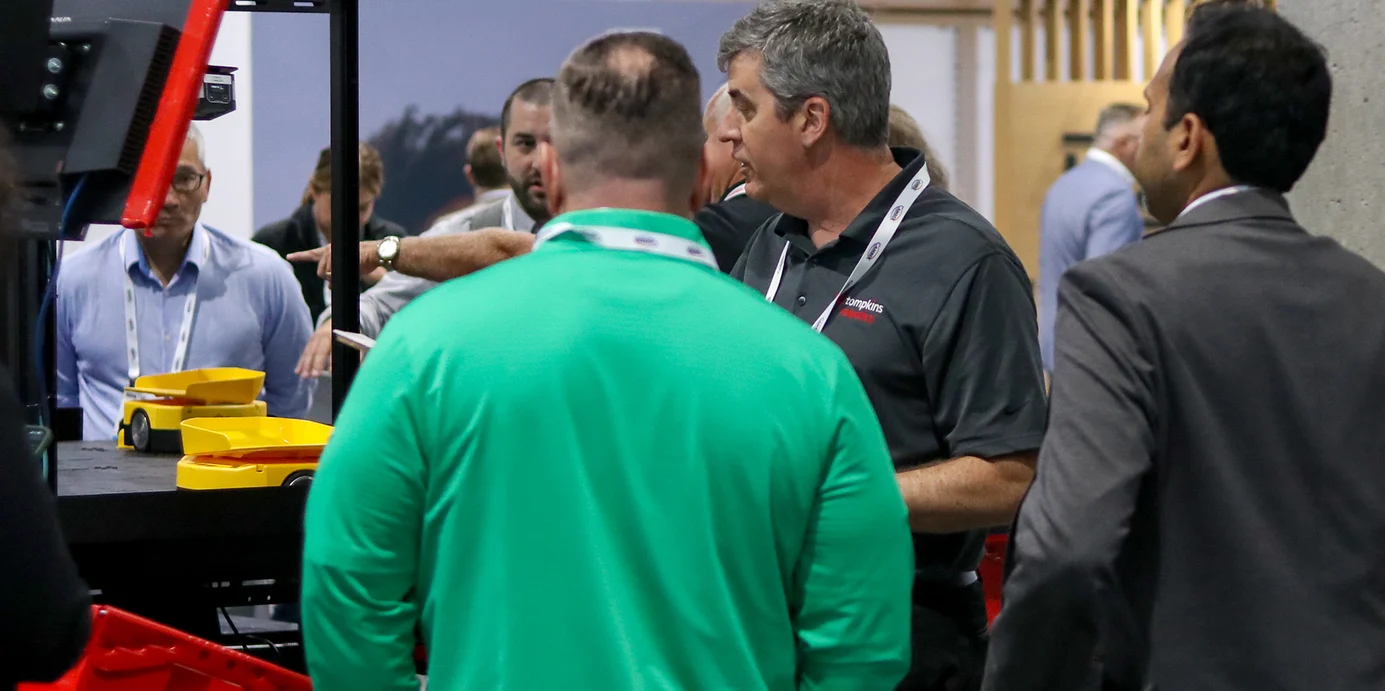
Buyers arriving in March carry shorter capital-approval chains than in any prior cycle. A MODEX survey of 412 operations VPs shows 61% must now prove ROI inside 12 months to secure board sign-off, up from 34% in 2022. On-floor equipment trials have become de-facto due-diligence, replacing multi-site pilots slashed to save calendar time. Demonstration lanes double as living RFPs—forklift energy readouts, AMR pick logs, and RFID inventory reports are exported on the spot for finance teams running discounted-cash-flow models back home.
Stakeholder Roles Redraw Around Compliance Clock
Operations executives hunt automation that lifts throughput without adding headcount, yet must also satisfy ESG auditors. Technology integrators test API hand-offs between legacy WMS tiers and new carbon-accounting modules. Sustainability officers, once peripheral visitors, now book dedicated floor walks to capture equipment-level emissions data for 2027 SEC filings. Supply-chain strategists scan the transportation zone for urban-logistics partners able to trim final-mile CO₂ grams before peak-season surcharges bite.
Labor Scarcity Spurs Collaborative, Not Replacement, Robotics
MHI data puts 2026 unemployment in transportation and warehousing at 2.8%, intensifying hybrid automation strategies. Vendors respond with cobot pick-assist arms, exoskeleton wearables, and vision-guided pallet jacks that augment rather than displace workers—categories that claimed 11% of 2020 floor space now occupy 28% of MODEX booths. The shift lowers union resistance and shrinks training cycles, critical when deployment windows are measured in weeks, not quarters.
Useful Resources
- MHI Industry Report: “Innovation in Supply Chain Automation 2026” – free PDF benchmarking 250 technology deployments
- Georgia Tech Supply Chain & Logistics Institute – open short courses on Scope 3 accounting for operations managers
- EPA SmartWay Program – carrier-ranking database to vet modal emissions before procurement
- ASCM SCOR-DS model – updated framework aligning sustainability KPIs with standard supply-chain metrics
- MODEX 2026 mobile app – real-time booth locator and demo scheduler to compress on-site research time
Source: MODEX 2026 preview materials