Automation now tops every short-term fix list for warehouse labor shortages, demand spikes, and faster delivery promises, executives from retail, manufacturing, and third-party logistics told industry panels this year.
From Cost-Cutter to Revenue Driver
Fifteen years ago a conveyor belt was booked as a payroll trimmer; today the same line sits under “revenue enablement.” Modern goods-to-person systems slice pick times 55 % while feeding SKU-level data to pricing engines. That pairing—speed plus intelligence—turns a one-off purchase into a platform that can be ramped up for holiday peaks and dialed back in January without hiring or firing, a flexibility boards now value above short-term wage savings.
Labor Scarcity Rewrites Fulfillment Job Descriptions
Warehouse employment in the United States is still 6 % below its 2019 level even though e-commerce volume has doubled, Bureau of Labor Statistics data show. Younger applicants rank “technology” and “career path” ahead of hourly pay. When tote transport or palletizing is handed to robots, companies recast staff as robot coordinators, data analysts, or exception handlers—jobs that pay more and stay filled. The shift gives recruiters an edge in markets where seasonal vacancy rates can hit 40 %.
Adaptive Capacity Outruns Market Volatility
The pandemic, the Suez blockage, and Red Sea diversions proved that static footprints buckle when volume swings 30 % in a quarter. Modular sorters, autonomous mobile robots, and micro-fulfillment nodes can be leased or redeployed within weeks, letting firms absorb surges without signing long warehouse leases. During the 2025 holiday cycle, retailers with plug-and-play automation hit 97 % of next-day promises versus 82 % for peers that relied on manual overflow, parcel-tracking group MetaPack reported.
Hidden Costs of Waiting Outweigh Installation Risks
Each month of delay erodes margin in ways a capex sheet never shows. Overtime premiums, inventory shrink from rushed handling, and re-ship costs after mis-picks can total 6 % of net sales, Deloitte calculates. Add the social-media fallout of one bad unboxing and the cash-equivalent damage quickly surpasses the annual lease rate of an entry-level AMR fleet.
Three-Wave Roadmap Turns Supply Chain Into Innovation Hub
Firms that automate in sequence—first data visibility, then mechanized movement, finally AI-driven optimization—deliver a 15 % higher internal rate of return than those that tackle random pain points, MIT’s Center for Transportation & Logistics reported in 2025. Cross-functional teams co-led by operations and IT release working capital trapped in inventory, funding each new wave and keeping the network one step ahead of competitor moves.

Action Steps
- Map order profiles and SKU velocity to find bottlenecks where automation unlocks data as well as speed.
- Model labor, inventory, and service-level scenarios over five years; include the cost of stock-outs and brand erosion, not just wages.
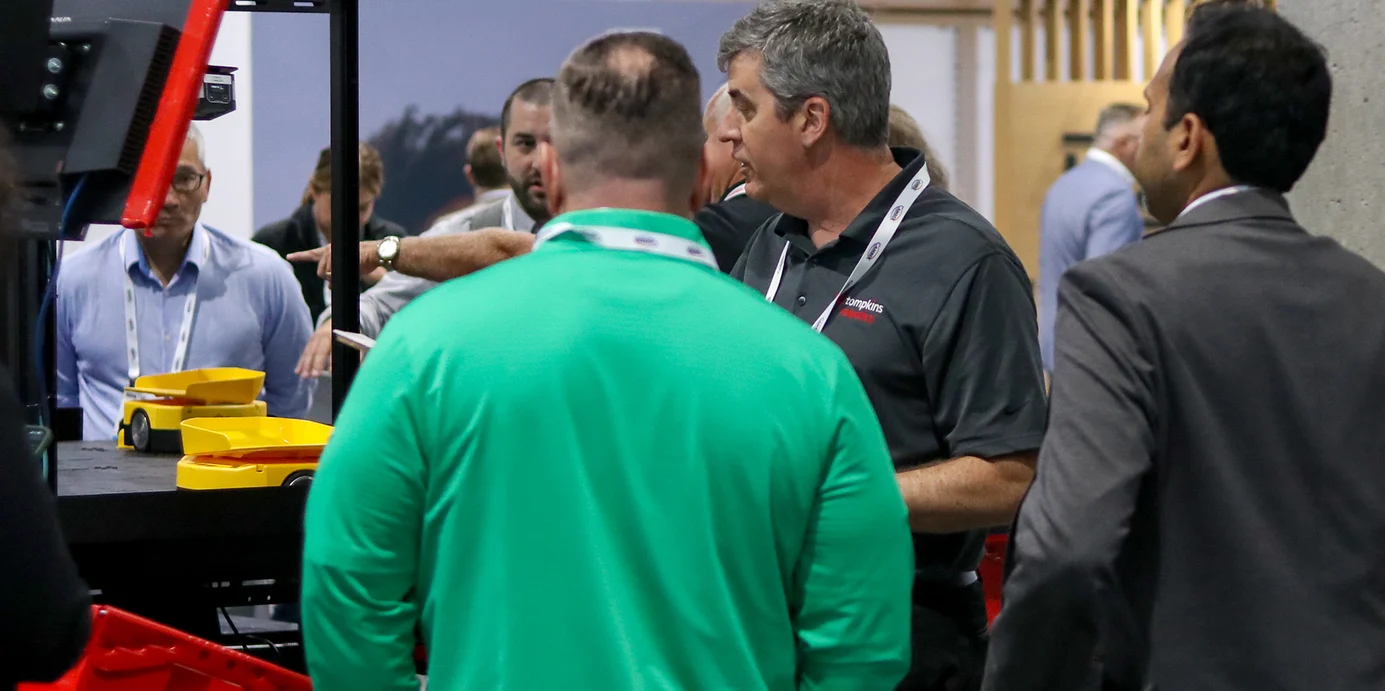
- Pilot a scalable technology—e.g., autonomous carts—that can be re-leased if volumes shift, limiting stranded-asset risk.
- Build upskilling paths tied to new equipment so employees view robotics as a promotion vehicle, not a pink slip.
- Review performance quarterly; redeploy savings into the next automation wave before market volatility widens.
Sources: Bureau of Labor Statistics; MetaPack; Deloitte; MIT Center for Transportation & Logistics