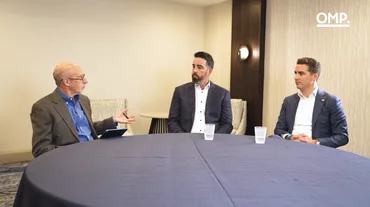
AstraZeneca says it has trimmed surplus inventory and unlocked working capital after scrapping its old forecast-driven planning model and installing a capacity-aware engine built on OMP software, a switch executives call “a big leap” in supply-chain clarity.
AstraZeneca Replaced Unconstrained Forecasts With Capacity-Limited Plans
Before 2023, planners at the $45 billion drug maker relied on demand projections that ignored factory speed limits and raw-material shortages. “We didn’t understand material risk,” recalls Mark Trainor, senior director of global transformation and technology. The gap ballooned safety stock across a network of 25 plants serving 130 countries. Executives say millions of dollars sat frozen in early-stage bulk ingredients that could not be finished on schedule.
OMP Software Maps True Capacity and Material Limits
The company licensed UniPlan from Belgian vendor OMP to anchor schedules in real-world constraints. The module ingests line-speed data, clean-room hours, and lead times for more than 2,000 SKUs, then balances demand, capacity, and inventory policies in one model. Jasper Waters, OMP’s global life-sciences lead, calls the outcome “a living digital twin” that refreshes nightly instead of the previous weekly batch run.
Three-Year Roll-Out Centers on Planner Upskilling
Deployment started at Cambridge, U.K., headquarters in 2021 and reached plants in the U.S., Sweden, and China by late 2024. Each wave spent six months on data scrubbing and change management so planners would trust system alerts instead of overriding them. Roughly 350 employees attended simulation workshops where they rerouted batches after mock reactor failures; the drills cut user-generated schedule changes by 38 % within six months of go-live.
Automation Shifts Human Focus to Exception Management
Routine netting and pegging now run without human touch. Planners step in only when projected late orders exceed a set dollar threshold. Trainor says the average employee spends 55 % less time building baseline schedules and instead chases root causes such as sterilization backlogs or customs delays at overseas API suppliers. OMP says life-science clients typically see a three-point inventory drop within 18 months; AstraZeneca will not quote figures but confirms it has already redeployed capital to oncology launches.
Co-Innovation Model Earns Vendor Recognition
The two teams co-wrote 30 custom algorithms, including one that ranks biologic batches by temperature-controlled shipping windows. OMP handed AstraZeneca its 2025 Customer Innovation Award, calling the joint work “a benchmark for pharma digital planning.” Enhancements born from the project—shelf-life-constrained heuristics among them—are being folded into the vendor’s standard life-science template for future clients.
Key Takeaways for Pharma Supply-Chain Leaders
- Swap forecast-driven MRP for capacity-limited plans to surface hidden material risk
- Spend six months on design and data quality before go-live; bad master data will cripple any constraint engine
- Retrain planners to manage exceptions, not spreadsheets; automation pays off only when humans trust the signal
- Treat the software vendor as a co-innovator; shared IP can shorten later roll-outs across sites and regions
Useful Resources
- ISPE Good Practice Guide: Applied Manufacturing Excellence in Pharma Supply Chains – free checklist for capacity-based planning
- OMP Supply-Chain Planning Handbook – downloadable PDF with life-science case studies and KPI benchmarks
- Gartner 2025 Magic Quadrant for Supply-Chain Planning Solutions – compares constraint-based platforms including OMP
- AstraZeneca Sustainability Report 2025 – outlines inventory-reduction metrics tied to working-capital goals
Source: AstraZeneca, OMP